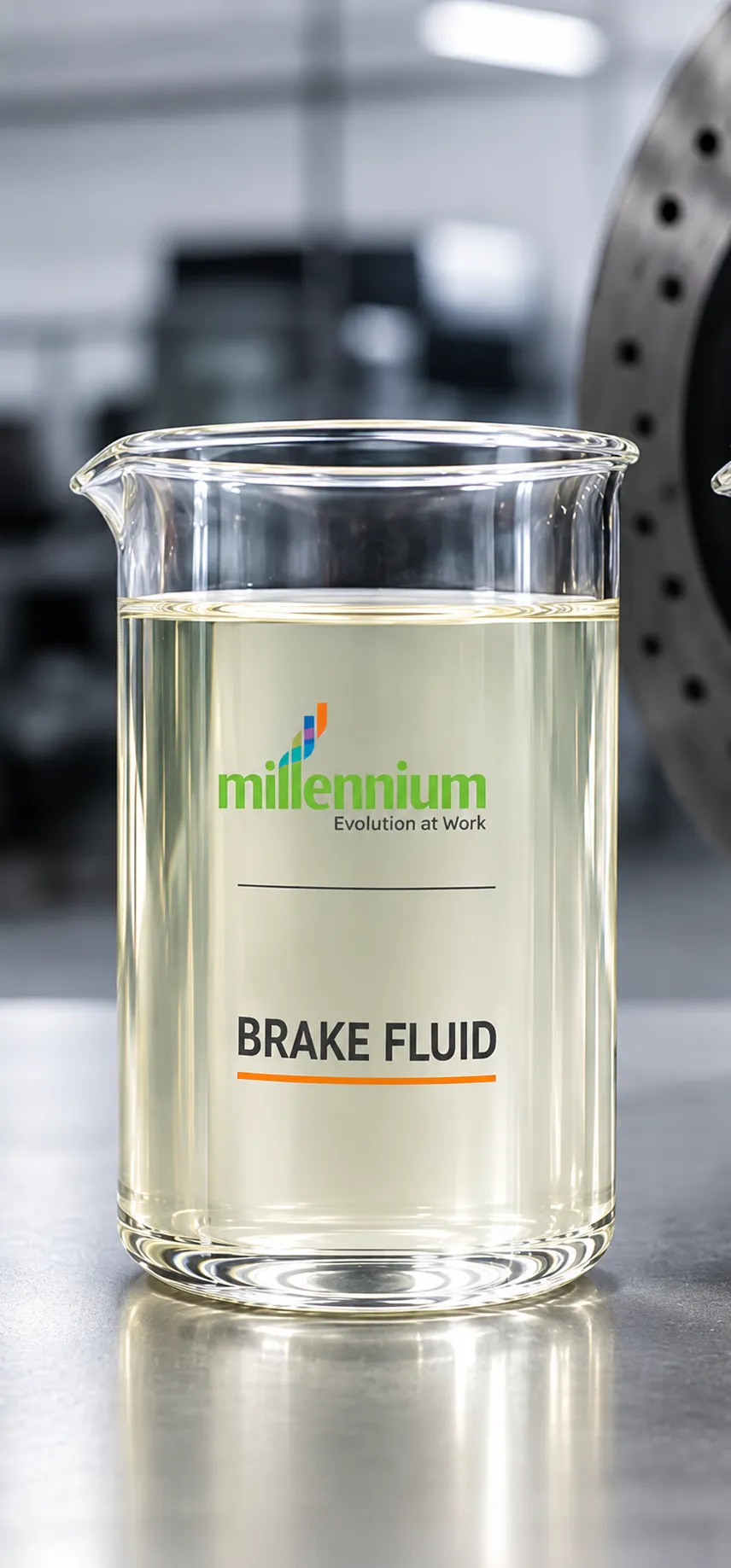
The automotive industry is continuously evolving with advancements in vehicle technology, braking systems and safety requirements. As modern vehicles become more sophisticated, the demand for reliable and high-performance automotive brake fluids continues to grow. Brake fluids play a critical role in hydraulic braking systems by transferring pressure from the brake pedal to the braking components, ensuring effective and consistent vehicle stopping performance.
A professional brake fluid manufacturer must focus on product quality, formulation technology and compliance with international DOT standards to meet changing automotive requirements. DOT 3, DOT 4 and DOT 5.1 are important brake fluid classifications used across different vehicle applications. Understanding their characteristics and future developments helps automotive businesses, distributors and bulk buyers make informed sourcing decisions.
The Growing Demand for High-Performance Brake Fluids
Modern automotive systems require brake fluids that can perform reliably under different temperatures and operating conditions. Increased vehicle performance, advanced braking technologies and demanding driving environments make fluid quality an important consideration.
High-performance brake fluids are designed to maintain suitable hydraulic properties while supporting efficient braking system operation.
Some important performance characteristics include:
-
Thermal Stability: Helps maintain fluid performance under elevated operating temperatures.
-
Boiling Point: Appropriate boiling-point characteristics help reduce the risk of vapour formation during demanding braking.
-
Viscosity Control: Supports effective fluid movement through hydraulic braking components.
-
Corrosion Protection: Suitable additives help protect compatible metal components.
-
Material Compatibility: Formulations must be compatible with the seals and materials specified for the braking system.
As automotive technology develops, manufacturers continue to focus on improving formulation consistency and meeting increasingly specific performance requirements.
Understanding Different Types of Automotive Brake Fluids
DOT classifications establish performance requirements for automotive brake fluids. DOT 3, DOT 4 and DOT 5.1 are commonly used grades, each designed for particular vehicle specifications.
1. DOT 3 Brake Fluid
DOT 3 brake fluid is commonly used in older vehicles and conventional automotive hydraulic braking systems. It provides hydraulic pressure transmission and supports reliable braking when used in systems designed for this specification.
Applications:
-
Automotive hydraulic systems in older vehicles.
-
Conventional passenger vehicles.
-
Vehicles requiring DOT 3 specifications.
Packaging: 250ml, 500ml, 1L and bulk quantities.
Export Port: Jebel Ali / RAK.
Lead Time: 3–5 days.
For more information, visit the DOT 3 Brake Fluid product page.
2. DOT 4 Brake Fluid
DOT 4 brake fluid is widely used in modern vehicles and high-temperature braking systems. It has higher minimum boiling-point requirements than DOT 3, making it suitable for applications that require improved resistance to elevated operating temperatures.
Applications:
-
Modern passenger vehicles.
-
High-temperature brake systems.
-
Automotive hydraulic systems requiring DOT 4 specifications.
Packaging: 250ml, 500ml, 1L and bulk quantities.
Export Port: Jebel Ali / RAK.
Lead Time: 3–5 days.
Explore the DOT 4 Brake Fluid product page for additional product details.
3. DOT 5.1 Brake Fluid
DOT 5.1 brake fluid is designed for compatible modern braking systems requiring specific high-performance fluid characteristics. It offers higher minimum boiling-point requirements and lower maximum viscosity limits than DOT 3 and DOT 4 under applicable test conditions.
Applications:
-
Modern automotive braking systems.
-
High-temperature brake applications.
-
Vehicles requiring DOT 5.1 specifications.
Packaging: 250ml, 500ml, 1L and bulk quantities.
Export Port: Jebel Ali / RAK.
Lead Time: 3–5 days.
Future Trends in Automotive Brake Fluid Technology
The future of automotive brake fluids will be influenced by developments in vehicle engineering, safety standards and advanced braking technologies.
1. Improved Thermal Performance
Modern braking systems require fluids capable of maintaining suitable performance under demanding temperatures. Continued formulation research focuses on meeting the relevant boiling-point and viscosity requirements.
2. Advanced Vehicle Braking Systems
Electronic stability control, anti-lock braking systems (ABS) and other advanced vehicle technologies place specific demands on braking system components. Suitable brake fluid characteristics remain important for reliable hydraulic operation.
3. Consistent Manufacturing Quality
Automotive customers increasingly expect consistent product specifications and dependable quality. Manufacturers are focusing on improved production processes, testing and quality-control procedures.
4. International Market Expansion
Growing automotive markets create opportunities for brake fluid manufacturers and distributors. Reliable bulk supply, flexible packaging and export capabilities are becoming important considerations for international buyers.
5. Technical Documentation and Compliance
Technical Data Sheets and relevant product documentation help buyers evaluate brake fluid specifications and suitability for their applications.
How to Choose a Reliable Brake Fluid Manufacturer
Selecting the right brake fluid manufacturer is important for automotive distributors, workshops, manufacturers and bulk buyers. Consider the following factors before choosing a supplier:
-
DOT Standards: Check whether the products meet the applicable DOT performance requirements.
-
Product Range: Look for suppliers offering DOT 3, DOT 4 and DOT 5.1 grades.
-
Quality Assurance: Evaluate manufacturing processes and product testing procedures.
-
Technical Information: Request Technical Data Sheets (TDS) for product specifications.
-
Packaging Options: Choose suppliers offering small containers and bulk quantities.
-
Export Support: Consider shipping arrangements, delivery schedules and international supply capabilities.
Brake Fluid Supply for Africa and Egypt
Africa and Egypt offer important opportunities for automotive fluid suppliers, regional distributors and industrial manufacturers. Businesses operating in these markets require dependable access to automotive brake fluids in different grades and packaging formats.
Millennium Lubricant Refinery LLC supplies high-performance automotive brake fluids meeting applicable international DOT requirements for modern and legacy vehicle applications.
Our product range includes DOT 3, DOT 4 and DOT 5.1 brake fluids, with packaging options of 250ml, 500ml, 1L and bulk quantities.
We support international supply through Jebel Ali and RAK, with an indicative lead time of 3–5 days. Our bulk supply solutions serve manufacturers, blending plants and regional distributors across Africa and Egypt.
Why Choose Millennium Lubricant Refinery LLC?
Millennium Lubricant Refinery LLC focuses on supplying automotive and industrial fluid products to international markets. Our brake fluid range supports different vehicle requirements through multiple DOT classifications.
Our supply capabilities include:
-
DOT 3, DOT 4 and DOT 5.1 brake fluids.
-
Multiple packaging options.
-
Bulk quantities for industrial buyers.
-
Export support through Jebel Ali and RAK.
-
Technical product information.
-
Supply solutions for distributors and manufacturers.
Conclusion
The future of high-performance automotive brake fluids will depend on evolving vehicle technologies, improved formulation standards and increasing demand for reliable braking performance. DOT 3, DOT 4 and DOT 5.1 continue to serve different automotive requirements, making product selection and manufacturer reliability essential.
Millennium Lubricant Refinery LLC provides automotive brake fluid solutions for modern and legacy vehicles, with flexible packaging and bulk supply options. Contact our team to request technical information and discuss your distributor or bulk purchasing requirements.




