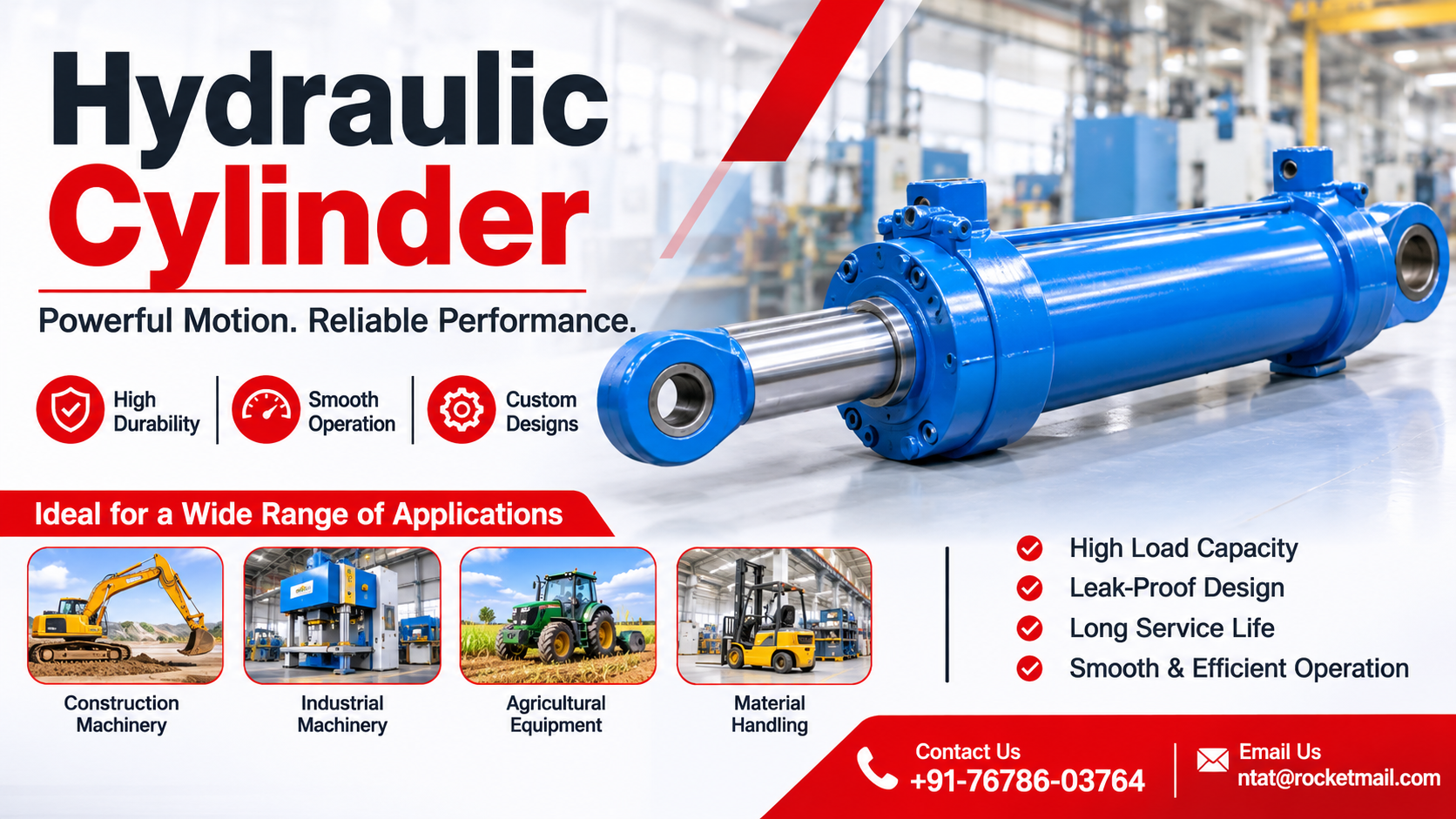
A hydraulic cylinder plays an important role in converting hydraulic pressure into controlled linear movement. It supports lifting, pressing, pushing and positioning operations across manufacturing plants, construction equipment and material-handling systems. However, selecting the wrong cylinder can lead to leakage, inconsistent movement, premature wear and unnecessary maintenance costs.
Finding suitable Hydraulic Cylinder Suppliers requires more than comparing prices. Buyers must evaluate technical specifications, construction quality, application requirements and the supplier's ability to provide the right product. Before placing an order, consider these seven important checks to make a more informed purchasing decision.
Check the Application and Load Requirements
Start by understanding where the hydraulic cylinder will operate. A cylinder used in an industrial press may have different requirements from one installed in a construction machine or agricultural equipment.
Consider the following details:
-
Maximum load the cylinder must handle.
-
Required pushing or pulling force.
-
Operating frequency and duty cycle.
-
Working environment and temperature.
-
Available installation space.
These details help determine the appropriate cylinder configuration. Sharing application information with Hydraulic Cylinder Manufacturers also reduces the risk of ordering an unsuitable product.
Verify Bore Diameter, Rod Diameter and Stroke Length
Dimensions directly influence cylinder performance. Three specifications deserve particular attention:
Bore Diameter: Determines the piston area and influences the force generated at a given pressure.
Rod Diameter: Affects the cylinder's resistance to buckling under compressive loads. Long-stroke applications may require particular attention to rod stability.
Stroke Length: Defines how far the piston rod travels during operation. An incorrect stroke can prevent machinery from completing its intended movement.
Buyers should provide dimensional drawings or existing cylinder measurements wherever possible. Never assume that two cylinders are interchangeable simply because their external dimensions appear similar.
Confirm the Working Pressure and Force Capacity
Every hydraulic cylinder has an operating pressure range that must match the hydraulic system. Selecting a cylinder without checking pressure compatibility can create safety and performance problems.
Before purchasing, verify:
-
Normal system operating pressure.
-
Maximum pressure and pressure spikes.
-
Required extension and retraction force.
-
Hydraulic fluid compatibility.
-
Expected operating cycle.
Remember that cylinder force depends on pressure and effective piston area. Retraction force is generally lower than extension force because the piston rod reduces the effective area.
A reliable Hydraulic Cylinder Dealer should be able to discuss these requirements and help clarify whether the proposed configuration suits the intended application.
Examine Material, Surface Finish and Construction
Cylinder durability depends on the quality of its major components. Buyers should examine the barrel, piston rod, end connections and internal components.
Pay attention to:
-
Barrel material and internal surface finish.
-
Rod material and corrosion protection.
-
Piston alignment and component fit.
-
Weld quality, where applicable.
-
End-cover and connection construction.
For example, equipment operating in dusty or humid industrial environments may require suitable rod protection and sealing arrangements.
When evaluating Hydraulic Cylinder Manufacturers in India, request relevant material details and drawings rather than relying only on general descriptions such as heavy-duty or industrial-grade.
Inspect Seals and Leakage Protection
Seals prevent hydraulic fluid from escaping and contaminants from entering the cylinder. Poor sealing can cause pressure loss, reduced movement accuracy and maintenance interruptions.
Check whether the proposed sealing arrangement is suitable for:
-
Hydraulic fluid type.
-
Operating temperature.
-
Working pressure.
-
Piston speed.
-
Environmental exposure.
Also consider rod wipers, which help prevent dust and external particles from entering the cylinder.
Wholesale Hydraulic Cylinders should not be evaluated only by their purchase price. The suitability and expected service life of sealing components can influence the overall maintenance cost.
Ask About Quality Testing and Inspection
A cylinder may look satisfactory externally but still have internal issues that affect performance. Before finalising an order, understand what inspections are performed.
Ask the supplier about:
-
Dimensional and bore inspection.
-
Rod straightness and surface finish.
-
Seal installation checks.
-
Pressure testing procedures.
-
Leakage inspection.
-
Stroke and movement verification.
Where relevant, request inspection reports or test documentation for the supplied configuration.
A Hydraulic Cylinder Manufacturing Company in India should be able to explain the quality checks applicable to its products. Buyers should also confirm whether testing records can be provided with the order.
Evaluate Pricing, Supply Capability and After-Sales Support
Price matters, particularly when purchasing multiple cylinders for production or maintenance requirements. However, the lowest quotation may not represent the best long-term value.
Compare quotations based on identical specifications, materials, sealing arrangements and testing requirements.
Also clarify:
-
Standard and customised configuration availability.
-
Minimum order quantity, if applicable.
-
Expected dispatch schedule.
-
Packaging and transportation arrangements.
-
Warranty terms and service support.
-
Availability of replacement seals and components.
A Hydraulic Cylinder Wholesaler or supplier should communicate commercial terms clearly. For bulk requirements, consistent specifications across repeat orders are particularly important.
Choosing the Right Hydraulic Cylinder Supplier
The right supplier understands both the product and its intended application. Whether you need a replacement cylinder, a customised configuration or wholesale quantities, evaluate technical compatibility before considering price alone.
N.T. Associates is based in Ghaziabad, Uttar Pradesh, and offers hydraulic cylinders alongside other hydraulic products for industrial applications. Its product range includes single-acting, double-acting, telescopic, tie-rod and welded-body cylinder configurations. Buyers can discuss application requirements, dimensions and stroke-length needs before selecting a suitable product.
Conclusion
Selecting the right hydraulic cylinder requires careful evaluation of its dimensions, pressure capacity, construction, sealing and quality checks. These seven considerations help industrial buyers compare Hydraulic Cylinder Suppliers more effectively and avoid compatibility problems. A technically suitable cylinder, supported by clear product information and dependable supply arrangements, can contribute to consistent machinery operation and better long-term purchasing decisions.
Frequently Asked Questions (FAQs)
1. What should I check before buying a hydraulic cylinder?
Check the application, load capacity, bore diameter, rod diameter, stroke length, working pressure, sealing arrangement and quality inspection procedures.
2. How do I choose between single-acting and double-acting cylinders?
Single-acting cylinders use hydraulic pressure for movement in one direction, with return movement provided by an external force or spring. Double-acting cylinders use hydraulic pressure for both extension and retraction.
3. Why is stroke length important when selecting a hydraulic cylinder?
Stroke length determines the maximum linear travel of the piston rod. Incorrect sizing can affect machine movement, positioning accuracy and installation compatibility.
4. Are customised hydraulic cylinders available in India?
Yes. Depending on the manufacturer's capabilities, cylinders can be configured according to application requirements, dimensions, mounting arrangements, pressure and stroke length.
5. How can I compare different hydraulic cylinder suppliers?
Compare technical specifications, material details, sealing quality, testing procedures, pricing transparency, supply arrangements and after-sales support rather than choosing solely on the lowest quotation.