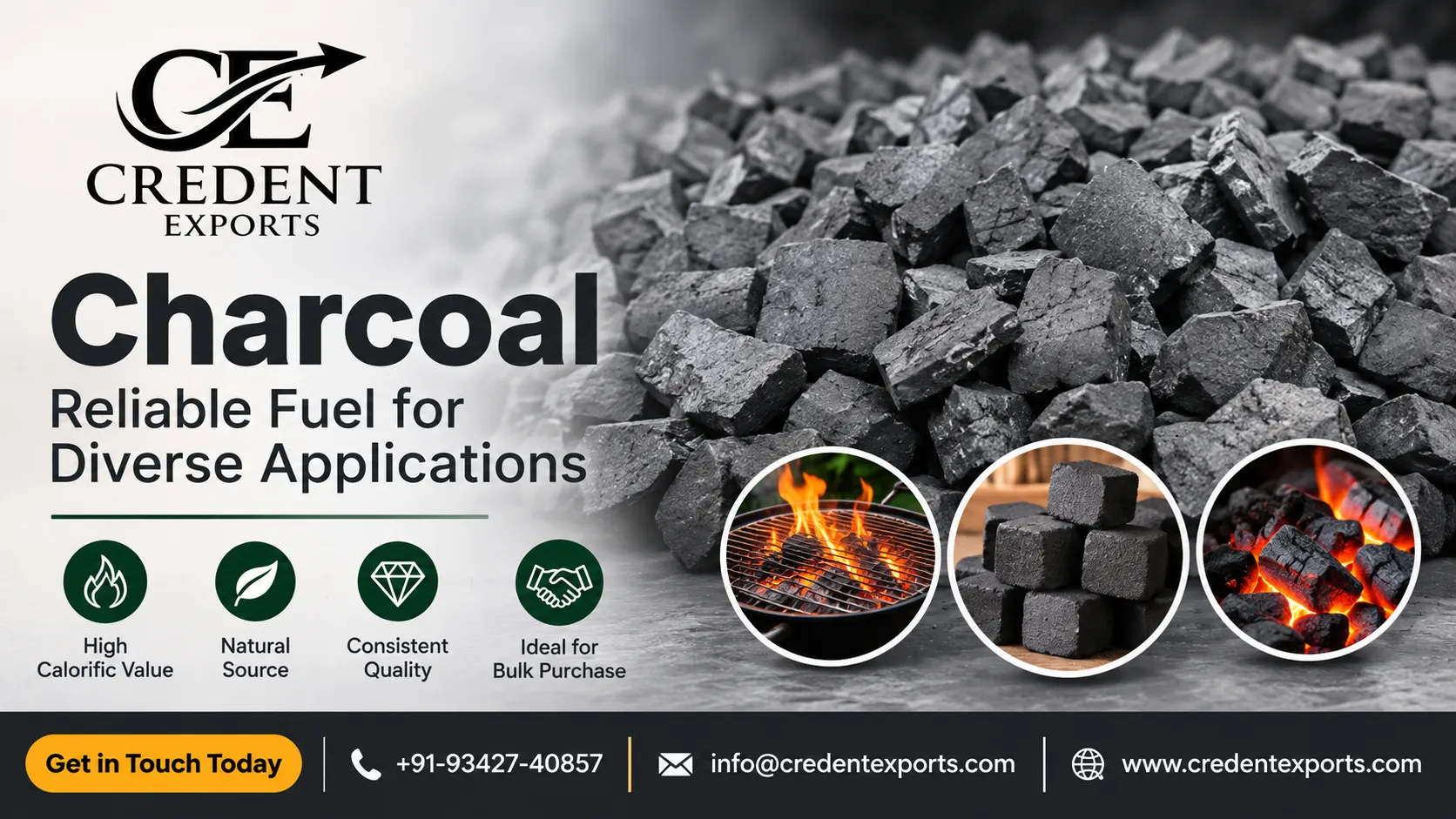
Charcoal continues to serve as an important fuel and carbon-based material across cooking, grilling, heating, metalworking and several industrial applications. Its versatility makes it relevant to restaurants, barbecue businesses, distributors, retailers and industrial procurement teams. However, selecting the right product requires more than comparing quotations. Buyers must understand the raw materials, carbonization process, physical characteristics and intended applications before making purchasing decisions.
For businesses planning regular procurement, product consistency and dependable supply arrangements are equally important. Different charcoal varieties offer different characteristics, and choosing an unsuitable grade can affect operational performance, storage and customer satisfaction. Understanding these factors helps businesses make informed decisions when sourcing charcoal in bulk.
Product Specifications
Charcoal is produced through carbonization, a process in which natural materials such as wood, coconut shells, bamboo and agricultural biomass are heated under controlled conditions with limited oxygen. This process removes moisture and volatile components, leaving behind a carbon-rich material suitable for different applications.
The final characteristics depend on the raw material and production conditions. Buyers should evaluate the following parameters before confirming an order:
Fixed Carbon: Fixed carbon content is an important indicator of fuel quality. It influences combustion performance and the amount of useful heat the product can provide.
Moisture Content: Excess moisture can affect ignition and combustion. Buyers should request moisture specifications and understand the testing method used.
Ash Content: Ash refers to the residue remaining after combustion. Its acceptable level depends on the intended application and the product grade.
Size and Shape: Charcoal may be available as irregular lumps, smaller pieces, powder or formed briquettes. Consistent sizing can make handling, packaging and application easier.
Density: Density influences the physical characteristics of charcoal and may affect its handling and burning behaviour.
Burning Characteristics: Heat output, ignition behaviour and burning duration should be evaluated according to the equipment and application.
Businesses looking for different product varieties can explore Charcoal to understand the available categories, raw materials and applications.
Common varieties include hardwood charcoal, lump charcoal, coconut shell charcoal, BBQ charcoal, charcoal briquettes and activated charcoal. Activated charcoal is specially processed for adsorption and filtration, so it should not be confused with ordinary charcoal used as fuel.
Objective
The primary objective of bulk charcoal procurement is to identify a product that meets operational requirements while supporting consistent purchasing arrangements.
For example, restaurants and barbecue businesses may prioritise suitable heat production, manageable ash levels and convenient handling. Industrial buyers may require particular carbon content, moisture levels and physical specifications according to their equipment and processes. Distributors, meanwhile, may focus on product presentation, packaging and customer preferences.
When evaluating Charcoal Manufacturers, procurement managers should ask about raw materials, carbonization methods, available grades, quality inspection and order fulfilment.
It is advisable to prepare a written purchase specification before requesting quotations. This should include product type, dimensions, quality parameters, packaging preferences, order quantity and delivery destination. Requesting samples before placing a large order can also help buyers examine product suitability.
Benefits
Selecting appropriate charcoal can offer several practical advantages for commercial and industrial businesses.
Multiple Applications: Depending on its type and grade, charcoal can be used for cooking, grilling, heating, metalworking and selected industrial processes.
Convenient Handling: Charcoal can be packed in suitable bags or containers, supporting organised storage, transportation and distribution.
Useful Heat Generation: Properly carbonized charcoal contains less moisture than untreated wood and can provide concentrated heat under suitable combustion conditions.
Different Product Formats: Businesses can choose between lump charcoal, loose pieces and shaped briquettes according to their operational needs.
Procurement Flexibility: Different raw materials and product grades allow buyers to evaluate options according to their applications and customer requirements.
Working with dependable Charcoal Suppliers can help businesses communicate specifications, plan repeat purchases and coordinate inventory requirements. When comparing Charcoal Suppliers in India, buyers should also examine sample quality, packaging, communication and delivery arrangements instead of focusing exclusively on quotations.
Availability
Charcoal availability depends on raw material sourcing, product grade, production arrangements and order quantity. Businesses purchasing regularly should communicate their consumption requirements and expected delivery schedules in advance.
Companies dealing with Charcoal wholesalers should confirm product availability, packaging formats, minimum order quantities and dispatch timelines. Similarly, businesses comparing Charcoal wholesalers in India should evaluate their ability to coordinate bulk orders and maintain consistency between supplies.
International procurement requires additional attention to documentation and logistics. Charcoal Exporters should clearly communicate product specifications, packaging arrangements and shipment-related requirements. Buyers considering Charcoal Exporters in India should verify destination-country regulations, product descriptions, applicable certificates and commercial documents before dispatch.
For international shipments, packaging should protect charcoal against moisture, contamination and physical damage during handling and transportation. Buyers should also agree on inspection procedures and acceptable quality parameters before confirming the purchase order.
About the Brand
Credent Exports operates in the charcoal and charcoal briquette segment, serving business requirements across domestic and international markets. Its charcoal product range includes information about different raw materials, product varieties and commercial applications.
The company also describes its coconut shell charcoal briquettes, produced using natural coconut shells. Its product information highlights attention to product consistency, packaging, burning characteristics and export requirements.
Credent Exports focuses on understanding buyer requirements related to product type, quantity, specifications and delivery arrangements. Businesses can discuss their intended applications and procurement expectations before proceeding with an order.
Conclusion
Successful charcoal procurement depends on selecting the right product grade, understanding its specifications and matching it with the intended application. Businesses should evaluate raw materials, moisture, fixed carbon, ash content, packaging and supplier reliability before placing bulk orders. A well-defined purchasing process can help wholesalers, distributors and industrial buyers establish more consistent sourcing arrangements.
FAQs
1. What are the main types of charcoal available in India?
Common varieties include hardwood charcoal, lump charcoal, coconut shell charcoal, BBQ charcoal, charcoal briquettes and activated charcoal. Each variety serves different applications depending on its characteristics and processing method.
2. Which specifications should buyers check before purchasing charcoal?
Buyers should examine fixed carbon, moisture content, ash content, density, dimensions and burning characteristics. The required specifications depend on the intended application.
3. Is coconut shell charcoal suitable for commercial applications?
Yes. Coconut shell charcoal is used in cooking and grilling, and it can also serve as a raw material for activated carbon production. Buyers should evaluate its grade and quality parameters before purchasing.
4. What is the difference between charcoal and coal?
Charcoal is manufactured by carbonizing biomass under controlled conditions with limited oxygen. Coal is a naturally occurring fossil fuel formed over geological periods. Their origins, characteristics and applications differ.
5. Why should businesses request charcoal samples?
Samples allow buyers to inspect appearance, size, physical consistency and suitability. However, laboratory testing may be necessary to verify technical parameters such as moisture, ash and fixed carbon.
6. What packaging considerations are important for bulk charcoal orders?
Packaging should protect the product against moisture, contamination and physical damage. Buyers should confirm bag material, quantity, labelling and transportation requirements before dispatch.
7. What should international buyers verify before importing charcoal?
Importers should confirm product specifications, packaging, commercial invoices, packing lists, shipping documents and destination-country regulatory requirements. Inspection arrangements and delivery terms should also be agreed upon before shipment.