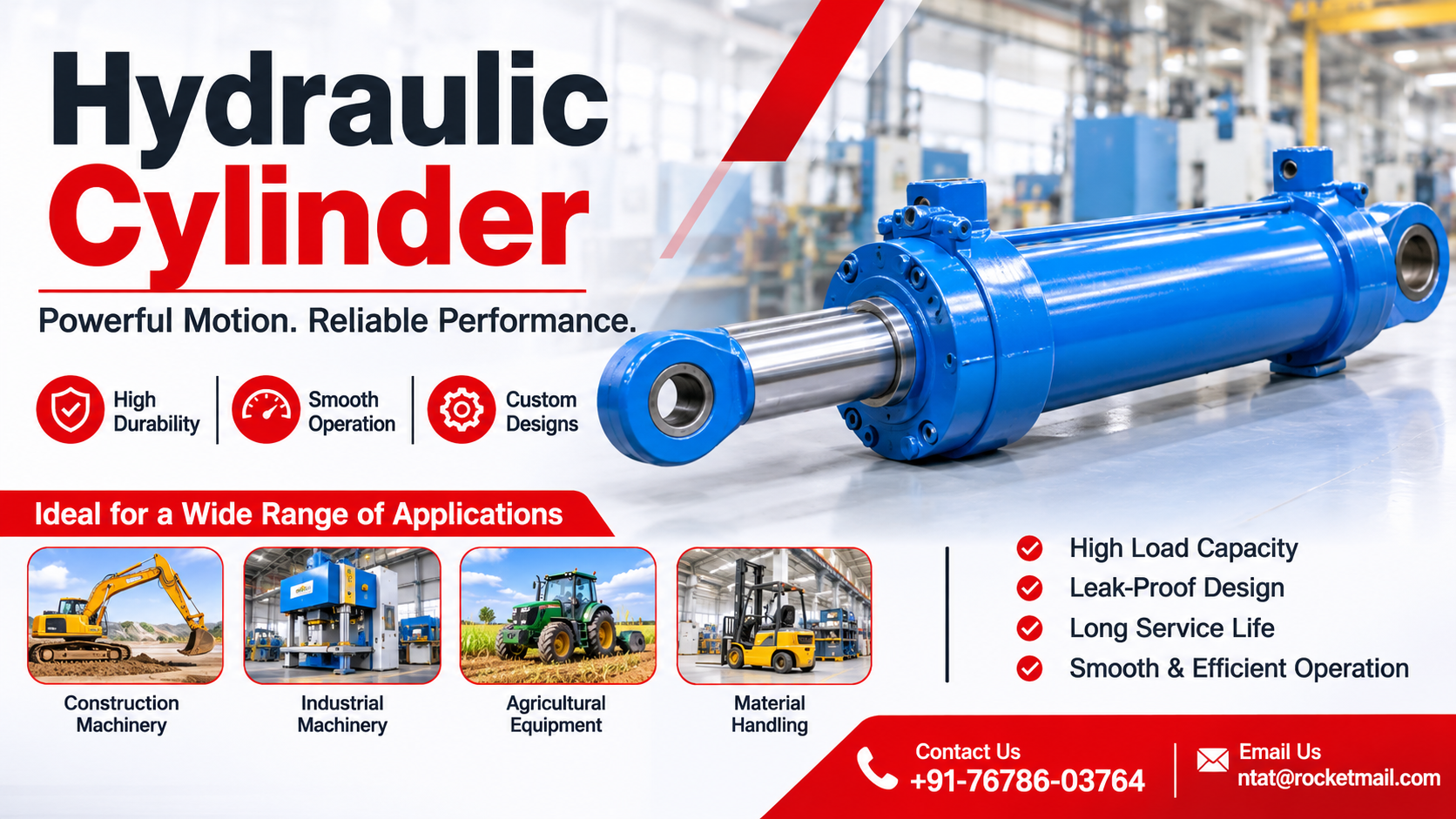
Industrial productivity depends on the smooth coordination of machines, pneumatic systems, and automation components. In manufacturing environments where repetitive movements are part of daily operations, selecting the right actuator can make a noticeable difference to equipment performance. A Mercury Tie Rod Cylinder is one such pneumatic component designed to deliver controlled linear motion in different industrial applications.
From automated assembly equipment to material handling machinery, tie rod cylinders help convert compressed air into mechanical movement. Their serviceable construction and different configuration options make them worth considering for businesses seeking dependable pneumatic actuation solutions.
Understanding the Importance of Tie Rod Cylinders in Industrial Automation
Pneumatic cylinders are widely used in industrial automation because they provide linear movement using compressed air. They operate through a piston moving inside a cylinder barrel, transferring force through a connected piston rod.
A tie rod cylinder has an assembled construction in which external rods hold the end covers securely against the cylinder barrel. This arrangement allows technicians to access internal components during maintenance and inspection.
A Mercury Pneumatic Cylinder can be considered for machinery requiring repeated extension and retraction movements. The appropriate model depends on operating pressure, load, stroke length, and installation requirements.
Businesses looking for suitable models can explore the Mercury Tie Rod Cylinder product range available through V.S. Enterprises.
How Mercury Tie Rod Cylinders Support Industrial Efficiency
Industrial efficiency is influenced by several factors, including machine design, component selection, maintenance practices, and operating conditions. The following characteristics explain how tie rod cylinders can contribute to efficient pneumatic operations.
1. Controlled Linear Movement
Pneumatic cylinders provide controlled movement for applications involving pushing, pulling, positioning, and clamping. In automated machinery, this movement helps perform repetitive operations according to the machine's control sequence.
2. Convenient Maintenance Access
The external tie rod arrangement makes the cylinder assembly accessible for inspection and servicing. Technicians can examine internal seals, pistons, and other compatible components when maintenance is required.
3. Flexible Application Requirements
Different industrial machines require different cylinder dimensions and mounting arrangements. Selecting the appropriate bore, stroke, and mounting configuration helps integrate the actuator into the existing machinery.
4. Support for Automated Production
Double-acting cylinders use compressed air for both extension and retraction. This makes them suitable for automated processes that require controlled movement in two directions.
5. Potential to Reduce Maintenance Disruptions
Regular inspection and timely replacement of worn components can help prevent unexpected operational interruptions. A serviceable cylinder design can make certain maintenance activities more manageable.
Industries That Use Mercury Tie Rod Cylinders
The suitability of a pneumatic cylinder depends on the machine's working conditions and required movement. Tie rod cylinder designs can be considered in several industrial sectors.
Automotive Manufacturing: Pneumatic actuators can operate assembly fixtures, component positioning systems, and clamping mechanisms.
Packaging Industry: Packaging machines use cylinders for product positioning, pushing, and repetitive mechanical operations.
Material Handling: Pneumatic cylinders can assist with transferring, positioning, and moving materials through suitable mechanisms.
Woodworking Industry: They can support clamping arrangements and movement functions in woodworking machinery.
Textile Manufacturing: Automated textile equipment may use pneumatic actuators for repetitive positioning and mechanical operations.
General Engineering: Machine builders can incorporate tie rod cylinders into customised equipment requiring reciprocating linear motion.
For other pneumatic actuator options, visit the Mercury Pneumatic Cylinders and Grippers category.
Factors That Influence Mercury Tie Rod Cylinder Performance
Selecting a cylinder without understanding the operating requirements can create problems during installation and operation. Consider these important technical factors.
Bore Diameter and Required Force
The cylinder bore determines the piston area, which directly influences the theoretical force generated at a particular air pressure.
A larger bore generally provides greater force at the same pressure. However, engineers should also consider load resistance, friction, mechanical efficiency, and the required safety margin.
Stroke Length and Movement Distance
Stroke length determines the distance travelled by the piston rod. Selecting an unsuitable stroke can affect machine movement and installation compatibility.
Measure the required travel distance before finalising the cylinder configuration.
Operating Pressure and Air Quality
The cylinder must operate within its specified pressure range. Consistent air supply and appropriate filtration also help protect internal components from moisture and contamination.
An FRL unit can help prepare compressed air by filtering, regulating, and lubricating it where lubrication is required by the equipment.
Mounting and Alignment
Incorrect mounting or misalignment can introduce unwanted side loads on the piston rod. Select a suitable mounting arrangement and ensure that the cylinder is properly aligned with the driven mechanism.
Cushioning and Position Sensing
Cushioning can help reduce impact as the piston approaches the end of its stroke. Where automated position monitoring is required, check compatibility between the cylinder's magnetic piston and the selected sensors.
Common Problems in Pneumatic Cylinders and Their Solutions
Even a properly selected pneumatic cylinder can experience performance issues if the system is not maintained correctly.
|
Common problem |
Possible reason |
Recommended action |
|
Slow movement |
Low air pressure or restricted airflow |
Check supply pressure and air lines |
|
Air leakage |
Worn seals or loose connections |
Inspect seals and fittings |
|
Irregular movement |
Contaminated air or misalignment |
Check filtration and alignment |
|
Excessive noise |
Incorrect cushioning or mechanical impact |
Inspect cushioning and mounting |
|
Reduced force |
Pressure loss or unsuitable bore size |
Verify pressure and force requirements |
Regular preventive maintenance, correct installation, and suitable air preparation help maintain dependable pneumatic operation.
Why Choose V.S. Enterprises for Mercury Pneumatic Products?
Finding the correct product and a dependable supply source is important for industrial procurement. V.S. Enterprises, based in Noida, supplies Mercury pneumatic products to industrial buyers, machine manufacturers, and maintenance professionals.
The company assists customers with product identification, technical requirements, and quotation enquiries.
Key benefits include:
-
Mercury pneumatic product sourcing.
-
Assistance with product and model identification.
-
Multiple pneumatic product categories.
-
Support for industrial procurement requirements.
-
GST-billed invoicing.
-
Pan-India dispatch assistance.
Customers can also explore the Mercury Pneumatics product range to find other components for their automation and compressed-air systems.
Frequently Asked Questions (FAQs)
1. What makes a Mercury Tie Rod Cylinder suitable for industrial machinery?
Its assembled construction, serviceability, and available configuration options make it suitable for industrial applications requiring controlled linear movement.
2. Can a tie rod cylinder be used in automated production lines?
Yes. Depending on the technical specifications, it can perform repetitive pushing, pulling, positioning, and clamping operations in automated equipment.
3. How does operating pressure affect cylinder performance?
Operating pressure influences the force generated by the piston. Insufficient pressure may reduce the available force, while operation beyond the specified pressure rating can damage components.
4. What maintenance is required for a pneumatic tie rod cylinder?
Regularly inspect seals, piston rods, mounting arrangements, air connections, and cushioning. Maintain clean, properly regulated compressed air according to the manufacturer's recommendations.
5. How do I select the correct Mercury Tie Rod Cylinder?
Consider the required bore diameter, stroke length, operating pressure, mounting configuration, load, and sensor requirements. Confirm the exact model specifications before ordering.
6. Where can I find a Mercury Tie Rod Cylinder Supplier in India?
V.S. Enterprises in Noida supplies Mercury pneumatic products and assists industrial buyers with product enquiries, specifications, and quotations.
Conclusion
Efficient pneumatic operations depend on selecting compatible components and maintaining them properly. A Mercury Tie Rod Cylinder can support different industrial applications through its serviceable construction, controlled linear movement, and available configuration options.
Whether you are upgrading existing machinery or sourcing actuators for a new automation project, evaluate the technical requirements carefully before purchasing.
For Mercury Tie Rod Cylinder enquiries in India, contact V.S. Enterprises to discuss your application and product requirements.