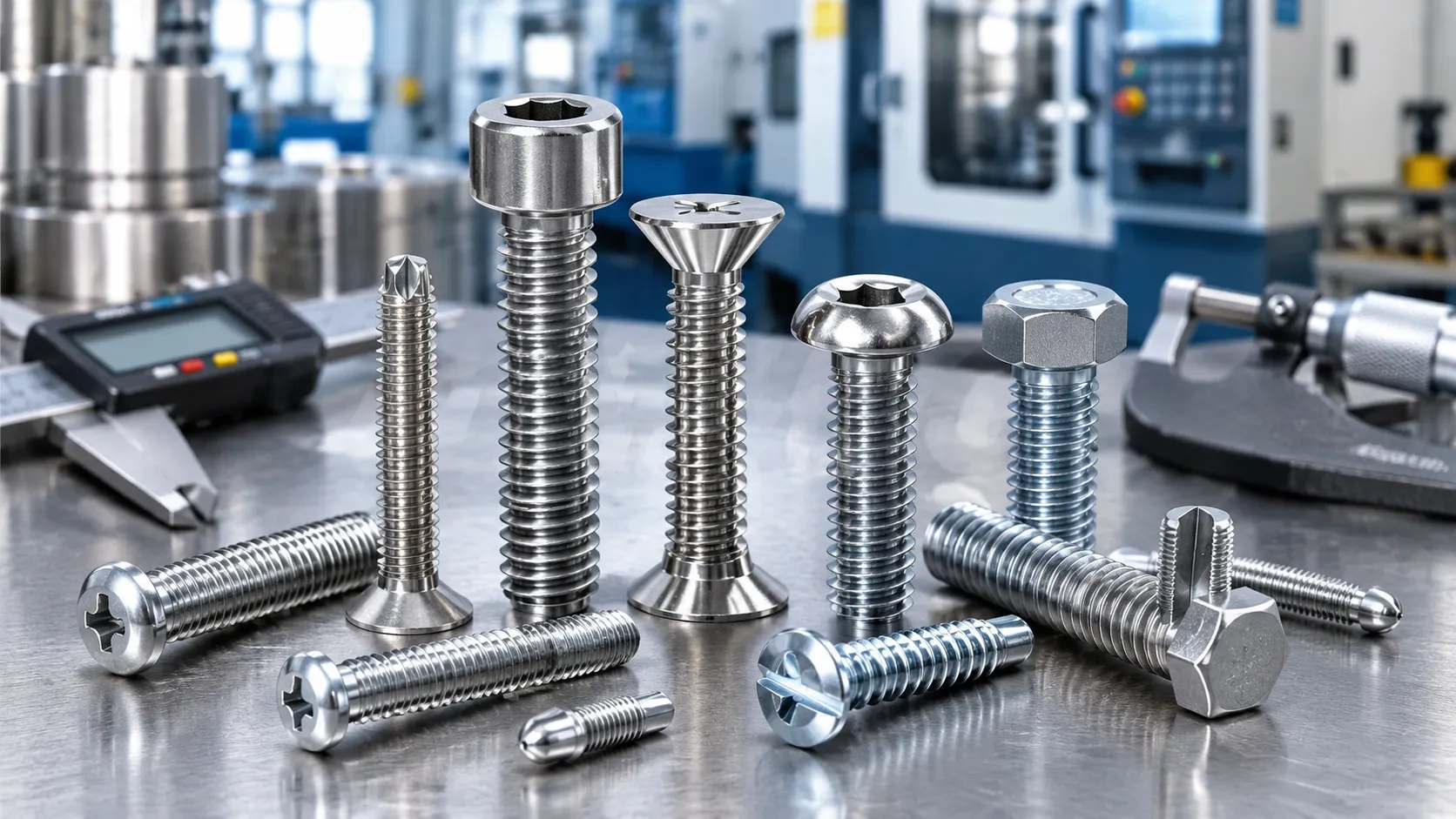
Industrial assemblies depend on small components that deliver consistent strength, stability and performance. Among these components, screws play an essential role in connecting materials, securing machinery parts and maintaining the structural integrity of finished products. However, choosing the correct screw requires careful consideration of material, dimensions, thread design and application requirements.
For manufacturers, construction companies and engineering professionals, selecting suitable screws can improve assembly quality, reduce maintenance requirements and support long-term operational reliability.
Understanding Different Types of Industrial Screws
Not all screws are designed for the same purpose. Their construction, head design and thread configuration determine where they perform best.
Some commonly used varieties include:
-
Machine Screws: Used for fastening metal components, machinery parts and equipment assemblies. They generally work with pre-threaded holes or compatible nuts.
-
Socket Head Cap Screws: Designed for applications requiring strong fastening and compact installation spaces. They are widely used in mechanical assemblies.
-
Countersunk Screws: Feature angled heads that sit flush with the material surface, making them suitable for furniture, machinery panels and equipment housings.
-
Self-Tapping Screws: Create their own mating threads during installation and are useful for metal, plastic and composite materials.
-
Self-Drilling Screws: Combine drilling and fastening operations, making them practical for roofing, cladding and sheet-metal applications.
-
Wood Screws: Designed to create secure connections in timber, cabinetry and furniture manufacturing.
Understanding these differences helps purchasing teams select fasteners that match their actual application instead of relying on a one-size-fits-all solution.
Consider the Material Before Selecting Screws
Material selection directly influences screw performance, corrosion resistance and mechanical properties.
Stainless steel screws are suitable for environments where resistance to moisture and corrosion is important. Mild steel is commonly considered for general-purpose fastening, while alloy steel is used in applications that demand specific strength characteristics.
Brass and copper offer useful properties for selected electrical, decorative and corrosion-sensitive applications. Nylon screws can be considered where lightweight construction or electrical insulation is required.
The final choice should depend on the operating environment, load requirements, material compatibility and applicable engineering specifications.
Why Dimensions and Thread Accuracy Matter
Even a high-quality screw can create assembly problems if its dimensions are incorrect.
Industrial buyers should evaluate:
-
Diameter and overall length.
-
Thread pitch and thread configuration.
-
Head style and drive type.
-
Required mechanical grade.
-
Dimensional tolerances.
-
Surface finish and coating.
For example, EASCO lists socket cap screws in diameters from M3 to M20 and lengths from 5 mm to 200 mm. Its countersunk screw range includes M3 to M16 diameters and lengths from 5 mm to 100 mm. These specifications help buyers understand the available product options.
Choosing the Right Head and Drive Design
Head styles influence installation, appearance and load distribution. Pan heads are commonly used for general fastening, while countersunk heads provide a flush finish. Socket heads are useful where higher installation torque and restricted access are important.
Drive configurations also matter. Phillips, slotted, Torx, hex and square drives require compatible tools. Selecting the correct drive can improve installation efficiency and reduce the possibility of tool slippage or damage.
What Should Buyers Expect from Screws Manufacturers?
Choosing reliable Screws Manufacturers is just as important as selecting the correct product.
Industrial buyers should assess the manufacturer's ability to provide consistent dimensions, suitable materials, documented specifications and dependable supply. Quality inspection, technical support and the availability of relevant test reports are also important considerations.
EASCO Fasteners offers different industrial screw categories, material options and specifications for construction, machinery and engineering requirements. Buyers can explore its industrial screws range to understand the available options.
Applications Across Industrial Sectors
Screws are used in numerous industries. Automotive manufacturers use them in component assemblies and panels. Construction professionals require different screw designs for roofing, framing and drywall installations. Electrical manufacturers use suitable fasteners for enclosures and equipment panels.
Furniture manufacturers, HVAC contractors and machinery producers also depend on correctly selected screws for reliable assembly.
Frequently Asked Questions
1. What are the most commonly used industrial screws?
Machine screws, socket head cap screws, countersunk screws, self-tapping screws and self-drilling screws are among the commonly used industrial varieties.
2. Which material is best for industrial screws?
There is no universal best material. Stainless steel, mild steel, alloy steel and brass each serve different applications. Selection depends on corrosion exposure, mechanical requirements and compatibility.
3. Why is screw thread accuracy important?
Accurate threads support proper engagement, secure fastening and consistent assembly. Incorrect threads can cause loosening, installation difficulties or component damage.
4. How do I select reliable Screws Manufacturers?
Evaluate manufacturing capabilities, material options, dimensional consistency, quality inspection, technical assistance and relevant documentation before placing an order.
5. Can industrial screws be purchased in different sizes and finishes?
Yes. Industrial screws are available in different diameters, lengths, grades and finishes. Buyers should confirm the required specifications with their supplier.
Conclusion
Selecting the right screws requires attention to material, dimensions, head design, thread accuracy and application conditions. Businesses that evaluate these factors carefully can improve fastening reliability and assembly performance. Working with capable manufacturers such as EASCO Fasteners can also help industrial buyers identify suitable screw solutions for their requirements.




