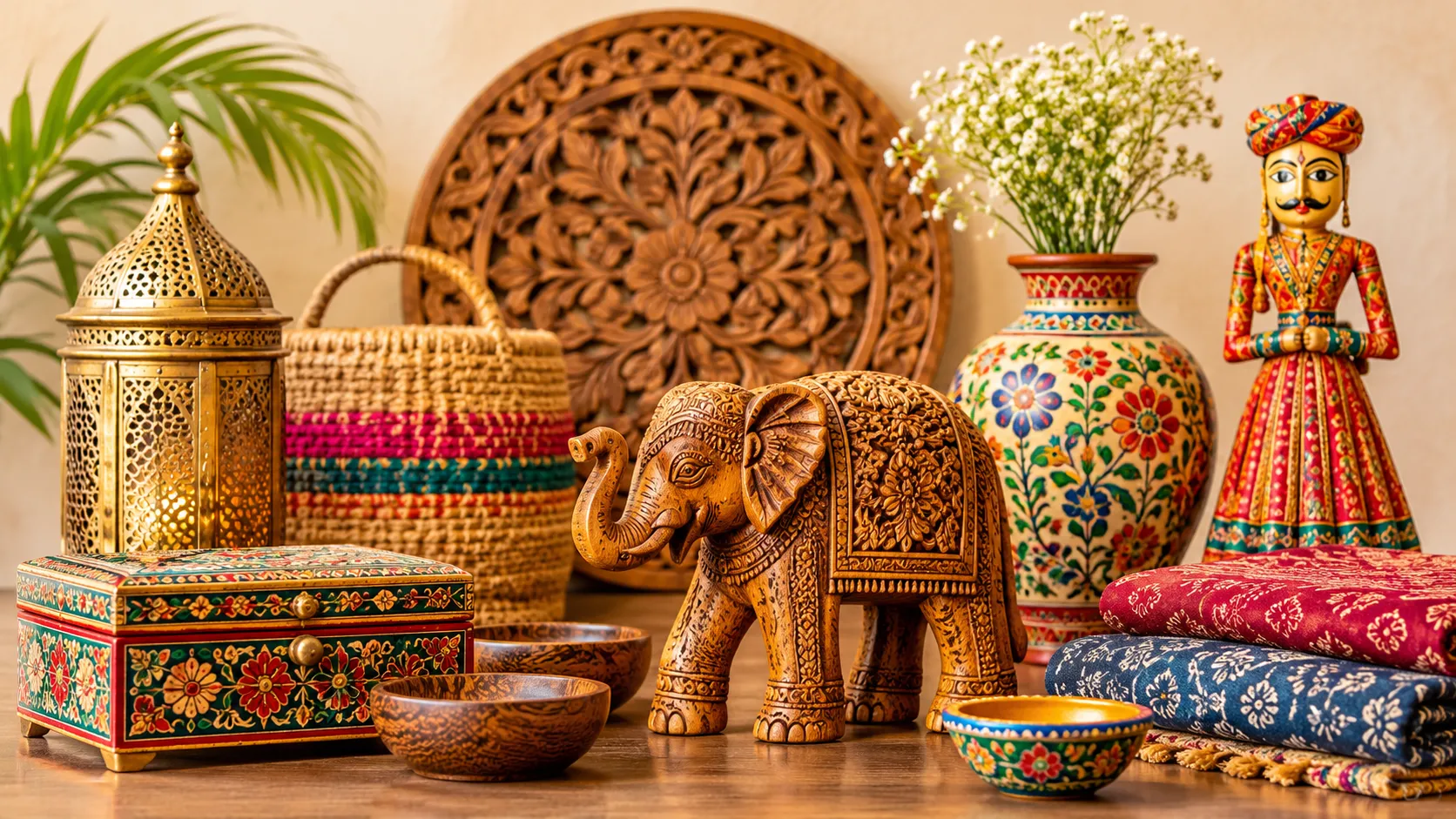
Retailers looking beyond mass-produced merchandise often face a difficult sourcing decision: how can they offer distinctive products without creating unnecessary procurement risks? This is one reason Indian Handicraft Items Manufacturers and suppliers are attracting attention from buyers seeking variety, traditional designs and products with individual character.
However, sourcing handicrafts requires more than selecting attractive designs. Material consistency, finishing, dimensions, order quantities and protective packaging can directly affect retail margins. Buyers need to evaluate suppliers with the same discipline they apply to any other merchandise category.
Product Specifications That Retailers Should Examine
When purchasing Handicraft Items, appearance is only the first checkpoint. Two products may look similar in photographs but differ considerably in construction, finishing and usability.
Retailers should establish clear specifications before requesting quotations.
Material and Construction: Identify the material used and ask whether the proposed product matches the approved sample. Material substitutions without written approval can create problems across production batches.
Dimensions and Weight: Confirm product measurements, usable dimensions and approximate weight. These details influence shelf planning, storage and freight calculations.
Surface Finishing: Examine edges, joints, coatings, paint application and decorative details. Minor finishing differences become more noticeable when several units are displayed together.
Design Consistency: Confirm whether patterns, colours and decorative elements can be maintained across repeat orders. Handcrafted production may involve natural variations, so acceptable tolerances should be discussed beforehand.
Packaging Requirements: Specify individual wrapping, protective inserts, carton strength and labelling requirements according to the product's fragility and destination.
Five Criteria for Evaluating Indian Handicraft Suppliers
Choosing among Handicraft Items Suppliers in India requires more than comparing quotation prices.
-
Product Understanding: Check whether the supplier understands your intended application, target customer and design requirements. Vague answers about materials or construction deserve further clarification.
-
Sample Evaluation: Request a representative sample before approving bulk production. Compare dimensions, finishing and material against the written specification. A photograph is not an adequate substitute.
-
Production Consistency: Ask how variations between production batches will be identified and addressed. A supplier who dismisses consistency concerns without explanation presents a procurement risk.
-
Commercial Transparency: Clarify MOQ, pricing structure, payment conditions and lead-time estimates. Reject quotations that leave important commercial terms undefined.
-
Packaging and Dispatch: Discuss carton dimensions, protective materials, shipping documentation and responsibility for transit damage. Attractive products can still become unsellable if packaging is inadequate.
Commercial Benefits of Sourcing Handicraft Items
Retailers consider Indian handicrafts for several practical business reasons.
-
Product differentiation: Distinctive designs can help retailers develop merchandise assortments that differ from standard mass-produced collections.
-
Category flexibility: Different decorative styles and product categories allow buyers to evaluate merchandise for varied customer segments.
-
Private-label opportunities: Where suppliers support the requested arrangements, buyers can discuss customised designs, branding and packaging.
-
Merchandising value: Handcrafted products can add visual variety to retail displays and complement other home décor or gift collections.
-
Assortment planning: Buyers can compare product styles, sizes and price points when developing a balanced purchasing plan.
-
Supplier diversification: Working with multiple qualified suppliers can reduce dependence on a single sourcing channel.
There is a trade-off: handmade production may involve greater variation and less predictable repeatability than standardised factory-made merchandise. Retailers should account for this before promising identical specifications across every reorder.
Availability and Sourcing Considerations in India
India offers buyers access to different handicraft-producing regions, materials and traditional product categories. However, geographic sourcing should be evaluated alongside commercial and logistical requirements.
Before placing an order, retailers should examine the supplier's dispatch location, distance to the intended destination, transport options and packaging arrangements.
For larger orders, freight calculations should consider carton volume, shipment weight, handling requirements and the possibility of transit damage. International buyers should also confirm applicable customs documentation and destination-market requirements.
Do not assume that a supplier located near a production cluster automatically offers shorter lead times. Production schedules, material procurement and order backlogs can influence the actual dispatch date.
About Square N Circle
At Square N Circle, we are based at Noor Sarai Street, Near Canal Road, Nagina, Bijnor, Uttar Pradesh-246762, India.
We understand that B2B sourcing decisions require clear product information and communication before commercial commitments are made. Buyers evaluating our product range can discuss their requirements with us and seek clarification about relevant product specifications and purchasing arrangements.
Discuss Your Handicraft Sourcing Requirements
We invite retailers, wholesalers, procurement managers and brand owners to share their sourcing requirements with us.
When contacting us, include the product category, required quantity, dimensions, material preferences, intended application, target market, packaging specifications and delivery location. If you require sampling, mention the details so the requirements can be discussed before a purchase order is considered.
Conclusion
Retailers are considering Indian handicraft suppliers because distinctive merchandise can create opportunities for stronger product differentiation and more varied retail assortments. However, successful sourcing depends on specifications, sample approval, production consistency and realistic freight planning. Selecting Handicraft Items Manufacturers through structured evaluation can help buyers build more dependable purchasing decisions as their product requirements evolve.
Frequently Asked Questions
1. Why are retailers choosing Indian Handicraft Items Suppliers?
Retailers value the variety of traditional designs, decorative styles and product categories available through Indian sourcing channels.
2. How should buyers evaluate Handicraft Items Manufacturers in India?
Review product specifications, samples, finishing consistency, commercial terms, packaging arrangements and communication before placing an order.
3. Can retailers request customised handicraft products?
Customisation may be possible depending on supplier capabilities, design complexity, material availability and order requirements. Confirm feasibility before finalising specifications.
4. Why is sample approval necessary before bulk purchasing?
Samples allow buyers to assess material, dimensions and finishing. However, buyers should also establish acceptable production tolerances because handmade products may vary.
5. What should wholesalers check before negotiating MOQ?
Evaluate expected sales volume, storage capacity, product assortment and landed cost. A lower MOQ is not automatically the better commercial decision if unit economics are unfavourable.




