Security has become an important consideration for businesses, property managers, and homeowners across the United Arab Emirates. From busy commercial buildings in Dubai to warehouses in Abu Dhabi and residential communities in Sharjah, property owners need reliable ways to monitor their surroundings, protect valuable assets, and respond to security concerns.
Modern CCTV systems offer much more than basic video recording. They can provide remote monitoring, high-resolution footage, motion detection, and integration with other security technologies. However, the effectiveness of a surveillance system depends on more than the cameras selected. Proper planning, professional installation, regulatory compliance, and ongoing maintenance all contribute to dependable performance.
When comparing CCTV companies in UAE, property owners should therefore consider the complete service rather than choosing a provider based only on equipment prices.
Why Do Businesses Need Professionally Installed CCTV Systems?
Every property has different security requirements. A small retail outlet may need cameras around its entrance, checkout counters, and stockroom, while a large industrial facility may require extensive coverage of warehouses, loading areas, parking spaces, and external boundaries.
Professional installation begins with understanding these requirements. A site assessment helps identify vulnerable locations, lighting conditions, camera angles, mounting positions, and possible blind spots.
Without proper planning, even expensive cameras may produce disappointing results. A camera positioned too high might capture activity without enough identifying detail, while an incorrectly selected lens may fail to cover the intended area.
A carefully designed surveillance system provides more useful coverage and reduces the likelihood of unnecessary equipment purchases.
Which CCTV Technologies Are Suitable for Different Properties?
Surveillance technology has developed significantly, giving property owners several options depending on their security priorities.
IP cameras are widely used in modern commercial environments. They transmit video over a network and can support high-resolution recording, centralised monitoring, and remote access. They are particularly useful for businesses that need to monitor several locations through one system.
Dome cameras are suitable for many indoor environments, including offices, shops, reception areas, and corridors. Their compact design makes them practical for locations where a less prominent camera installation is preferred.
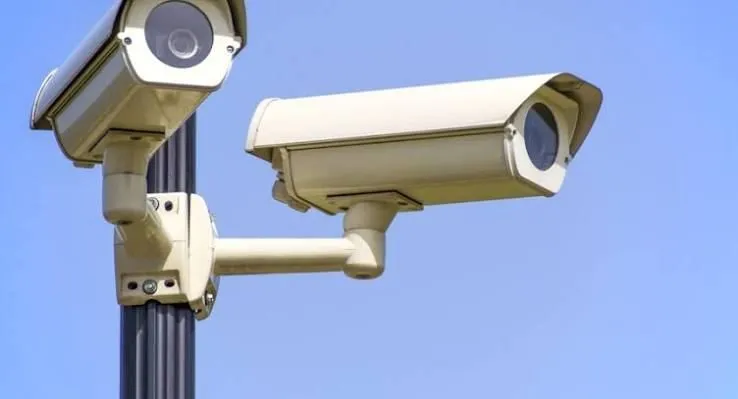
Bullet cameras are commonly installed outdoors to monitor entrances, building perimeters, parking spaces, and other exposed areas. Suitable weather-resistant equipment is important in the UAE, where dust, heat, and humidity can affect outdoor installations.
PTZ cameras offer pan, tilt, and zoom capabilities. They can be useful in larger facilities where security personnel need to monitor different directions or focus on specific activities.
Other useful features include infrared night vision, wide dynamic range for challenging lighting, motion detection, and video analytics. The right combination depends on the property's layout and the level of detail required.
Why Does Regulatory Compliance Matter Across the UAE?
One important consideration is that surveillance requirements are not necessarily identical throughout the country. Different emirates and property categories may have their own approval processes, technical standards, and security requirements.
Dubai, for example, regulates relevant security services through the Security Industry Regulatory Agency (SIRA). Its Preventive Systems Manual establishes technical requirements for surveillance systems, while its regulatory framework addresses the licensing of security service providers. Businesses with applicable security obligations should verify that their installer and proposed equipment meet the relevant requirements.
Abu Dhabi has its own surveillance framework overseen by the Monitoring and Control Centre (MCC). Property owners should check the applicable requirements for their premises rather than assuming that approvals in one emirate automatically satisfy another emirate's rules.
Before proceeding with an installation, businesses should ask their provider about relevant licences, equipment approvals, technical specifications, documentation, and any required inspections. This is particularly important for regulated commercial facilities and larger developments.
Privacy is another essential responsibility. The UAE's Personal Data Protection Law establishes a framework for protecting personal information. Businesses should use surveillance footage for legitimate purposes, restrict access to authorised personnel, and maintain appropriate safeguards for stored recordings.
How Should Businesses Evaluate CCTV Installation Quality?
A professional installation involves several stages, beginning with the site assessment and ending with system testing.
First, the installer should recommend camera locations based on actual security requirements. Entrances may require identification-level footage, while corridors or large outdoor areas may need wider monitoring coverage.
Next, the provider should select compatible recording equipment, network components, cables, and storage capacity. Poor-quality connections or inadequate recording hardware can affect the performance of an otherwise good camera system.
Installation quality also includes correct cable management, secure mounting, appropriate power arrangements, and reliable network configuration. Outdoor cameras should have suitable environmental protection, while equipment installed in exposed locations should be selected with local operating conditions in mind.
Finally, the complete system should be tested. Businesses should confirm that cameras capture the intended areas, recordings are saved correctly, timestamps are accurate, and authorised users can access the system as expected.
What Should You Know About Storage and Remote Monitoring?
A CCTV system is only useful when recorded footage can be accessed when needed. Businesses should therefore understand how their recordings are stored and protected.
Network video recorders (NVRs) are commonly used with IP camera systems, while digital video recorders (DVRs) are generally associated with compatible analogue camera systems. Storage requirements depend on camera resolution, the number of devices, recording schedules, compression settings, and applicable retention rules.
Remote monitoring is another valuable feature. Authorised managers can view live footage through compatible devices, making it easier to oversee multiple locations. However, remote access must be configured carefully.
Strong passwords, updated firmware, restricted user permissions, and secure network connections help protect surveillance equipment against unauthorised access. Businesses should also establish clear policies explaining who can review footage and under what circumstances.
Why Is Maintenance Important After Installation?
Surveillance equipment needs regular attention to remain dependable. Dust accumulation, damaged cables, network interruptions, power problems, and outdated software can gradually affect system performance.
A suitable maintenance programme should include camera cleaning, lens inspections, recording checks, storage assessments, and testing of remote access. Businesses should also confirm that backup power arrangements work correctly where required.
Maintenance is particularly important for warehouses, outdoor facilities, and commercial properties operating around the clock. A camera that has stopped recording may go unnoticed until footage is urgently needed.
When evaluating CCTV companies in UAE, businesses should ask whether maintenance and technical support are included in the proposal or available through a separate service agreement.
How Can Businesses Find a Suitable CCTV Installation Partner?
The best provider is one that understands the property's requirements and recommends a solution that can perform reliably over time. Businesses should compare technical experience, equipment quality, installation procedures, relevant licences, maintenance arrangements, and customer support.
A written quotation should clearly explain the proposed cameras, recording devices, storage capacity, installation scope, and any additional requirements. It should also identify which services are included and whether future expansion is possible.
For organisations looking for surveillance solutions across the Emirates, AMJ Technology Solutions provides CCTV installation and maintenance services for residential and corporate environments. Its solutions can be considered by property owners seeking professionally planned surveillance for their premises.
Conclusion
Choosing a surveillance provider is an investment in the long-term security and management of a property. The right system should offer suitable camera coverage, reliable recording, secure remote access, and a maintenance plan that supports consistent performance.
Businesses should also pay close attention to local regulatory requirements, as compliance procedures can differ between emirates and property types. By evaluating technical expertise, service quality, and after-installation support, property owners can make more informed decisions and build a surveillance system that meets their actual needs.
Ultimately, the value of CCTV comes from having a properly designed and maintained system that provides useful information when it matters most.