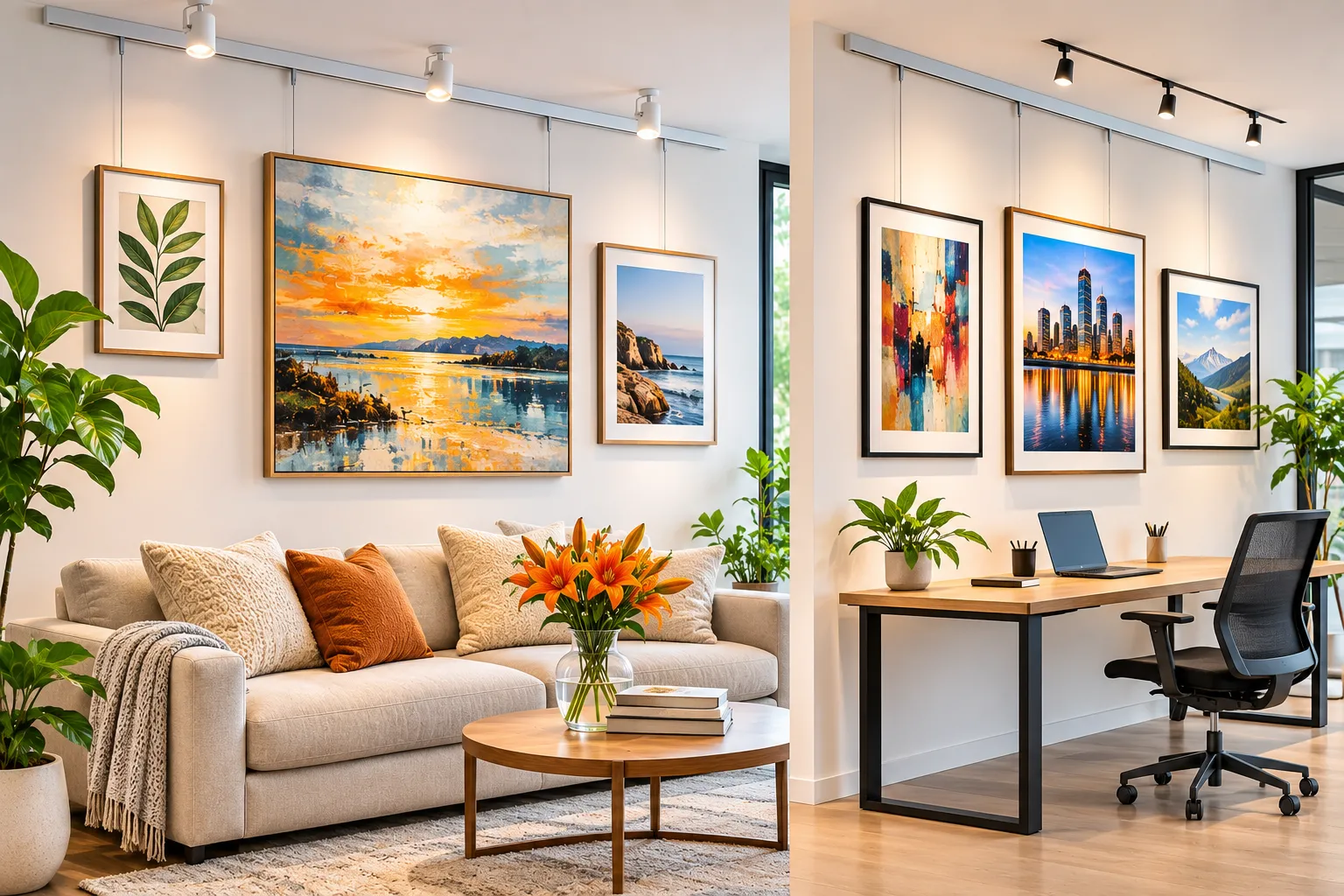
Walk into a room with thoughtful artwork and the difference is immediate. Walls feel warmer, conversations start more easily and the space seems to belong to the people who use it. Art is more than decoration, and the way it is displayed affects how much it contributes.
Motivational Benefits of Art in the Workplace
Workplaces are increasingly judged by the quality of the environment they offer. Research into office design shows that people respond to their surroundings, and art is one of the features that influences how they feel about their work.
A report on workplace art, commissioned by Brookfield Properties and produced by Perspectus Global, surveyed 3,250 workers across ten major cities in the United Kingdom. The study found that offices with art and cultural activities were viewed more positively than those without. Of the workers who said art pieces were part of their workplace, 69 per cent said the artwork contributed to their wellbeing at work. The report used the term “enriched environments” to describe workplaces that combine art displays with cultural and wellbeing events.
Academic research supports a similar conclusion. Work led by researchers Craig Knight and Alex Haslam examined offices with and without art and plants. Their findings suggested that people in enriched spaces were up to 17 per cent more productive than those in lean spaces. These studies come from the United Kingdom and the United States, so the results should be read as guidance rather than guaranteed outcomes in every Australian workplace though there’s no reason to suspect a significant difference in results.
Motivation does not come from art alone, and no single feature can solve problems with workload, leadership or culture. It grows when people feel that their working environment has been planned with care, and artwork is one of the most visible signs of that care. A well-chosen piece can spark conversation, offer a moment of calm during a busy day or simply make a corridor feel less institutional.
Art as a Tool for Wayfinding, Culture and Employee Ownership
Artwork can also help people find their way. Large pieces at corridor junctions, distinctive frames near lifts and colour-coded displays on different floors give visitors and staff clear visual cues. A building that is easy to find one’s way around feels more welcoming, particularly for first-time visitors.
Art also communicates culture. A collection that reflects the values, history or community of an organisation tells visitors something about how the business works and what it cares about. Local artists, regional landscapes and works created by staff can all reinforce that message.
Employee ownership is another benefit. When staff have a say in choosing artwork, or when a rotating display features local creators, people feel more connected to the space. The artwork becomes part of their daily experience rather than a backdrop they barely notice. Companies that involve employees often find the display sparks more pride and discussion than a purely corporate selection, which is why many choose art hanging systems that make rotation simple.
For art to work in this way, the display must be flexible. Walls that never change can become invisible to the people who see them every day, so an art hanging system that allows change keeps the environment engaging. Rotating pieces keeps the environment fresh and gives different teams the chance to share their perspectives.
Hanging Artwork at Work: Three Practical Benefits
Art displays often begin with good intentions and then stall because the practical side is overlooked. An art hanging system brings the practical and creative sides together. Choosing the right system at the start prevents many of those problems and keeps the project moving.
Good display systems make it possible to achieve these goals without damaging the building or disrupting the workplace. An art hanging system offers three practical benefits for offices, galleries and shared spaces.
1. Flexibility Without Repeated Drilling
A rail or track system is fixed to the wall once. Hooks and art hanging clips can then be moved to new positions as the collection changes, and this keeps the display adaptable. Teams can refresh a display for a new season, a new project or a visit from clients without making a fresh set of holes each time. This flexibility is valuable in offices where the layout changes frequently.
2. Protection for Walls in Leased Spaces
Many workplaces are leased, which means walls must be left in good condition at the end of the lease. A system that limits fixings to a single rail protects the surface and reduces the time needed for repairs. Property managers and tenants can discuss the approach before installation, which avoids disputes later.
It is still sensible to check the lease terms and speak with the building owner before any work begins. Approval processes vary, and a clear agreement at the start keeps the project on track.
3. Consistent Presentation Across Spaces
Organisations with multiple offices, showrooms or galleries often want a consistent look, and art hanging systems that share one finish make that easier. A single system with matching rails, hooks and finishes creates a coherent presentation from one site to the next. Staff and visitors notice when displays feel unified, and the result reinforces the brand without requiring every piece to match.
Planning an Art Display That Lasts
Planning starts with the wall. Measure its length and height, note any obstacles such as windows, doors or power points and consider how people will move past the display. A rail that runs the full length of a wall gives more options than a short section, while a single feature wall may suit a focused collection.
Next, consider the artwork. Decide whether the display will feature a fixed collection, a rotating selection or a mix of both. Check the weight of each piece and select hooks, cables and rails that comfortably support it. Lighting also matters, because well-placed lights can make artwork more engaging and reduce glare on glass.
Finally, think about maintenance. Schedule a regular check of fixings, hooks and cables, and record which pieces are on display and where they hang. A simple record makes rotation easier and helps staff replace worn components without guesswork. Dust, sunlight and general wear all affect artwork over time. A clear plan for cleaning, inspection and rotation keeps the display safe and attractive for years.
Consistency also helps visitors understand the collection. A clear theme, a simple label beside each piece and a logical route through the display make it easier for people to engage without feeling rushed.
Making Art Part of Everyday Life
Art has a place in every environment that people share, and art hanging systems help make that place practical as well as attractive. Homes benefit from artwork that reflects personal interests and family history. Workplaces benefit from collections that support wellbeing, culture and creativity. Galleries and retail spaces benefit from displays that are easy to change and simple to maintain.
The right art hanging systems support all of these goals. It allows artwork to be shown well, protects the surfaces around it and gives owners the flexibility to adapt as their needs change. Whether the setting is a living room, a boardroom or a gallery, the principle is the same: display art in a way that invites people to look closer.
Conclusion
Art matters because it shapes how people feel in the spaces they share. A thoughtful display, supported by a reliable art hanging system, can turn an ordinary wall into a source of inspiration. Contact The Gallery System at thegallerysystem.com.au or email info@thegallerysystem.com to discuss how art hanging clips, rails and hooks could work in your home, office or gallery.