Modern technology is changing how machines interpret the world around them. Cameras and digital imaging systems no longer serve only as tools for capturing pictures and recording videos. With artificial intelligence, they can identify objects, recognize visual patterns, and extract useful information from images in real time. This development is creating new opportunities across manufacturing, transportation, retail, healthcare, and security. At the center of this transformation is AI Object Detection Software, which enables computer systems to identify different objects and determine their positions within visual data.
Object recognition has become an important part of intelligent automation because businesses need more than basic image storage. They want systems that can understand visual information and support practical decisions. By combining computer vision, machine learning, and advanced image processing, modern detection solutions are helping organizations improve accuracy, reduce repetitive work, and gain better visibility into their operations.
Understanding the Intelligence Behind Object Recognition
Object recognition involves teaching computer systems to identify items, people, vehicles, equipment, and other visual elements. Unlike traditional image processing, which may depend on fixed rules, AI-based systems learn patterns from training data.
During development, machine learning models are trained using images containing different objects and visual conditions. The system learns characteristics such as shapes, edges, textures, and patterns that help distinguish one object from another.
Once trained, the model can analyze new images and identify objects based on the patterns it has learned.
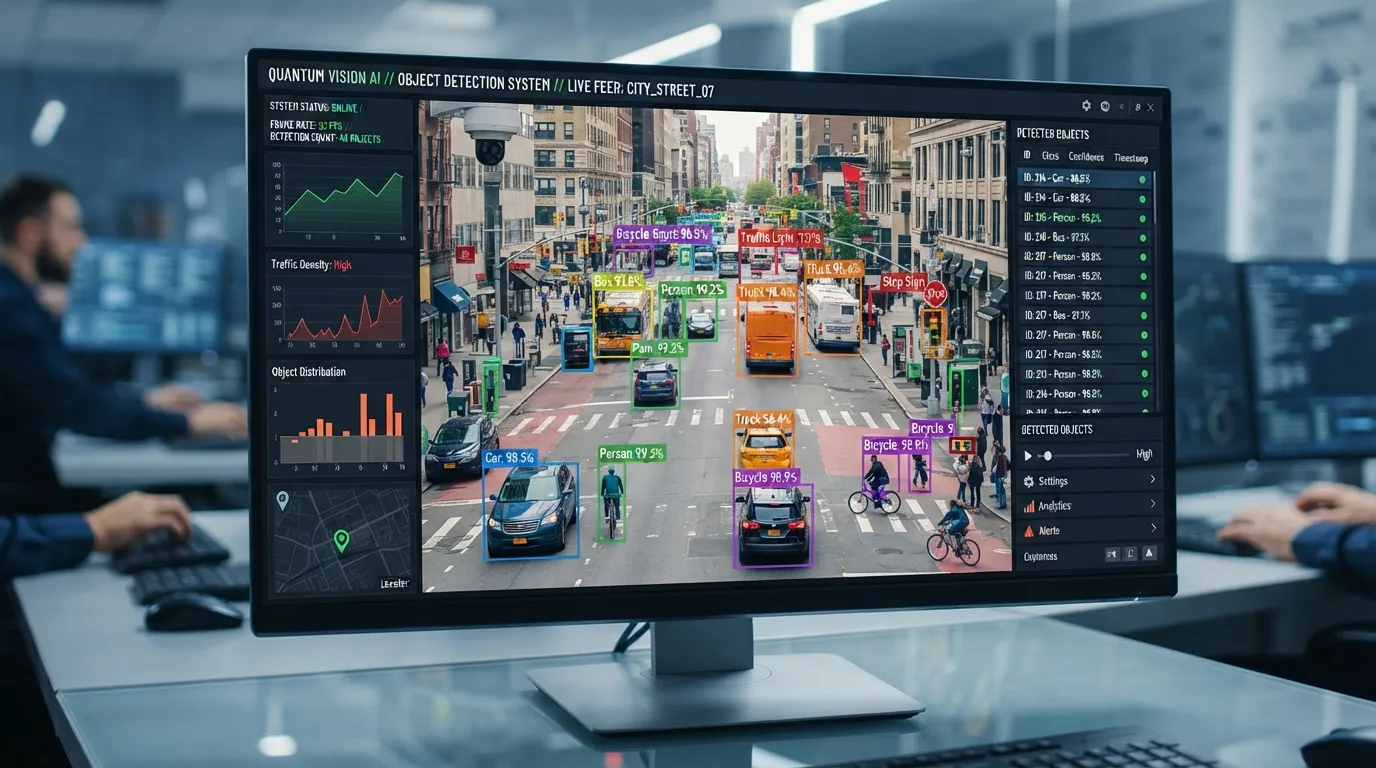
AI Object Detection Software goes a step further by identifying both the object category and its location within an image. Results are commonly displayed using labels and bounding boxes around detected objects.
How AI Object Detection Software Processes Visual Information
The detection process involves several connected stages that allow a machine to convert an image into meaningful information.
Image Collection and Preparation
The process begins when cameras, sensors, or uploaded files provide visual information. Image quality plays an important role because poor lighting, low resolution, and unclear backgrounds can affect detection performance.
Before analysis, images may be resized, adjusted, or processed to prepare them for the detection model.
Model-Based Object Identification
The prepared image is passed through a trained AI model. The model analyzes visual features and compares them with patterns learned during training.
It then identifies objects that match its learned categories. Depending on the application, these may include vehicles, packages, tools, products, animals, or other predefined objects.
Object Location and Classification
Detection systems identify where objects appear within an image. They may also assign confidence scores that indicate how strongly the model supports a particular prediction.
The results can then be displayed through visual labels, bounding boxes, or structured data that other applications can process.
Generating Useful Outputs
After detection, the system can send information to dashboards, monitoring platforms, or connected business applications.
For example, a warehouse system may record the detection of packages in a particular area, while a manufacturing platform may flag products that require additional inspection.
The Role of Machine Learning in Modern Object Detection
Machine learning is responsible for much of the intelligence behind modern visual detection. Instead of requiring developers to manually define every possible visual condition, trained models learn useful patterns from examples.
Training Models With Visual Datasets
Training datasets contain images with labeled objects. These labels help the model understand which objects appear in each image and where they are located.
The quality and diversity of training data influence how well a model performs in real environments.
A model trained using images from one type of warehouse, for example, may struggle when exposed to different lighting, camera angles, or packaging styles.
Deep Learning and Neural Networks
Deep learning models use multiple layers of artificial neural networks to analyze visual information.
Convolutional neural networks have played an important role in computer vision by helping models recognize visual features at different levels. More recent architectures also use advanced techniques to improve detection performance and processing efficiency.
These developments have made object detection useful in applications that require the identification of multiple objects within complex images.
Continuous Model Improvement
AI models may require retraining or fine-tuning when business requirements change. New products, different environments, and changing camera conditions can introduce visual patterns that were not included in the original training dataset.
Regular evaluation helps developers identify weaknesses and improve model performance over time.
Where Modern Object Recognition Is Making a Difference
Object detection has practical applications across industries where visual information can support monitoring, inspection, and automation.
Manufacturing and Industrial Inspection
Manufacturing facilities need consistent quality checks to identify damaged products, missing components, and production defects.
AI detection systems can examine products moving along production lines and identify visible issues that require further inspection.
This can reduce repetitive manual checking and help quality control teams focus on products that need attention.
Retail and Inventory Monitoring
Retail businesses manage large product collections and need accurate information about shelf availability and stock arrangements.
Object detection can identify products on shelves, recognize empty spaces, and support inventory monitoring.
When connected with inventory management systems, these capabilities can provide additional information about stock conditions and help employees organize restocking activities.
Transportation and Vehicle Monitoring
Transportation systems use cameras to monitor roads, parking areas, and vehicle movement.
AI detection models can identify vehicles, classify vehicle categories, and support traffic monitoring. These capabilities can contribute to parking management, traffic analysis, and transportation planning.
Security and Facility Management
Security teams often monitor multiple cameras across offices, warehouses, and commercial facilities.
Object detection can identify predefined objects or unusual visual events and generate alerts for operators.
These systems can help security personnel prioritize their attention, although important decisions should remain subject to human review.
Object Detection Versus Image Classification and Recognition
Several computer vision technologies are related, but they perform different tasks.
Image classification determines the main category represented in an image. For example, it may classify a picture as containing a car.
Object detection identifies the car and determines its location within the image. If several cars appear, the system can detect each one separately.
Image segmentation goes further by identifying the specific pixels belonging to each object. This can provide more detailed information about object boundaries and shapes.
Businesses should understand these differences before selecting a computer vision solution because each technique supports different operational requirements.
Choosing the Right AI Object Detection Software
Selecting a suitable detection platform requires careful consideration of the business environment and intended application.
Define the Detection Objectives
Organizations should identify which objects need to be detected and what actions should follow detection.
A manufacturing company may need product inspection, while a logistics business may require package identification and vehicle monitoring.
Clear objectives help development teams select appropriate models and system configurations.
Evaluate Accuracy in Real Conditions
A model that performs well during demonstrations may produce different results in an actual operating environment.
Businesses should test detection systems using realistic images and videos. Lighting changes, object movement, overlapping items, camera positions, and background activity should all be considered.
Consider Processing Speed
Some applications require immediate detection results, while others can process images in batches.
Businesses should determine whether they need real-time processing, cloud-based analysis, or edge computing. The choice depends on available hardware, network conditions, privacy requirements, and operational priorities.
Review Integration Capabilities
Detection software may need to connect with existing cameras, databases, dashboards, inventory systems, or manufacturing applications.
A well-integrated solution allows visual information to become part of wider business workflows instead of remaining isolated detection results.
Plan for Security and Maintenance
Visual data may contain sensitive business information or identifiable individuals. Organizations should review access controls, encryption, storage policies, and applicable privacy requirements.
They should also consider model updates, technical support, and ongoing performance monitoring.
Challenges That Affect Object Detection Accuracy
Despite technological progress, object detection systems can still experience limitations.
Poor image quality may prevent accurate identification. Objects that overlap or appear partially hidden can also be difficult to detect. Unusual backgrounds and lighting conditions may affect model performance.
Another challenge involves false positives and false negatives. A false positive occurs when a system identifies an object that is not actually present, while a false negative occurs when it fails to detect an existing object.
Businesses should evaluate these risks according to the importance of the application. Systems used for quality inspection or security monitoring may require additional verification procedures and human oversight.
The Future of Intelligent Object Recognition
Computer vision continues to develop as AI models become more capable and computing technologies improve. Modern systems are moving beyond basic object identification toward more advanced visual understanding.
Future applications may combine object detection with tracking, image segmentation, predictive analytics, and robotics. This could help businesses monitor object movement, automate inspections, and respond to changing operational conditions.
AI Object Detection Software will remain relevant as organizations look for ways to convert visual information into practical business intelligence. The greatest value will come from solutions designed around specific industry requirements, reliable training data, and measurable operational goals.
Final Thoughts
Modern object recognition represents an important development in artificial intelligence. Machines can now identify objects, locate them within images, and provide information that supports business operations.
From manufacturing inspections and retail monitoring to transportation and security, AI-powered detection offers opportunities to improve efficiency and reduce repetitive manual work.
However, successful implementation depends on accurate training data, realistic testing, appropriate hardware, and continuous evaluation. Businesses that understand these requirements can use intelligent visual detection to build more informed and efficient operations.