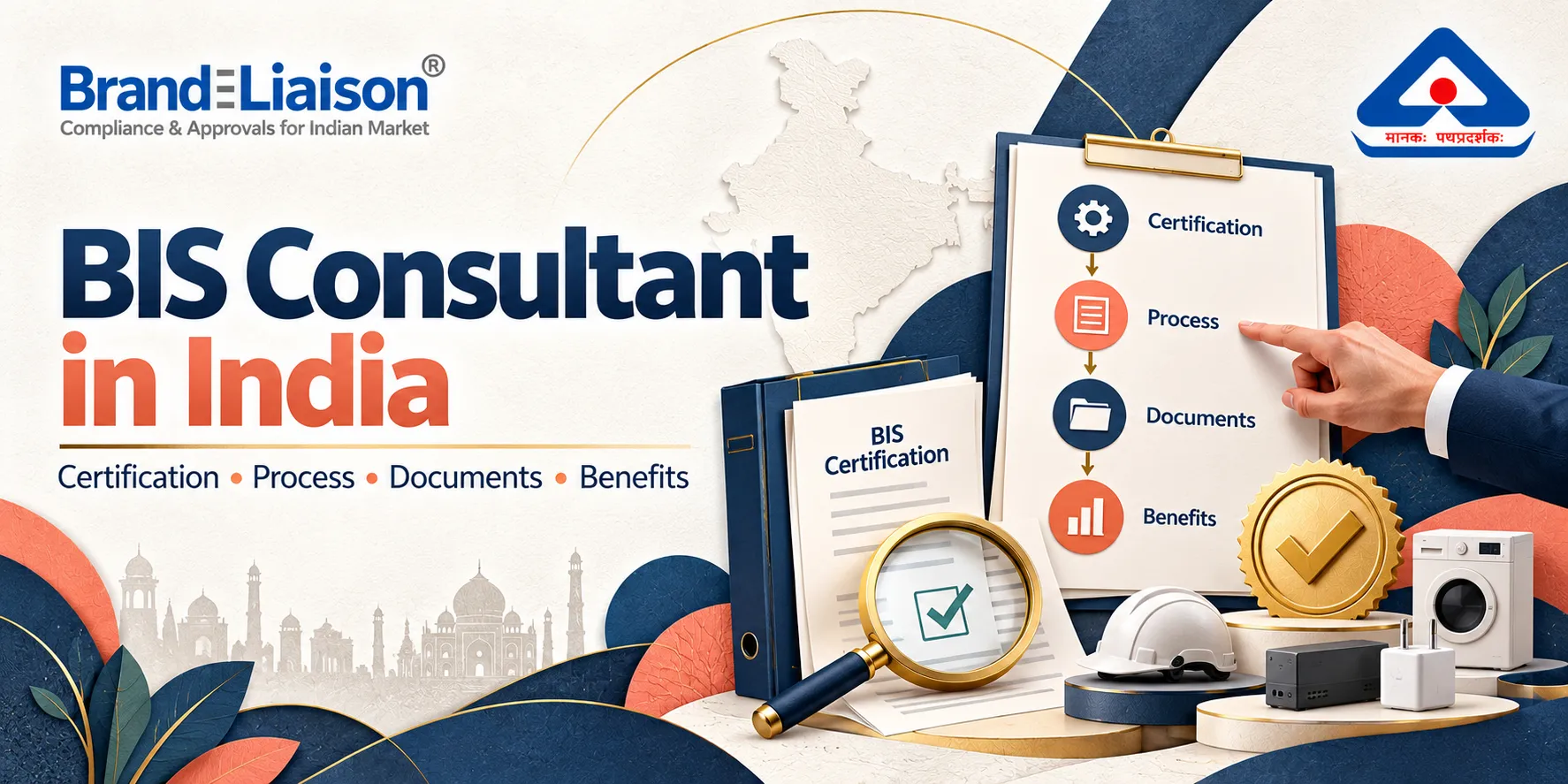
Understanding the Bureau of Indian Standards (BIS) certification process is important for manufacturers, importers, brand owners, and businesses planning to sell products in India. Depending on the product category and applicable regulations, businesses may need to obtain BIS certification or registration before manufacturing, importing, distributing, or selling certain products.
A BIS consultant in India can help businesses understand applicable Indian Standards, identify the relevant certification scheme, prepare documentation, coordinate product testing, and navigate the application process. Professional guidance can be particularly useful for companies unfamiliar with BIS procedures or managing certification for multiple products.
From BIS ISI Mark Certification and the Compulsory Registration Scheme (CRS) to the Foreign Manufacturers Certification Scheme (FMCS) and Scheme X, understanding the available certification routes is an important first step toward regulatory compliance.
Finding Experienced BIS Consultants in India
India has a diverse manufacturing and import sector, with businesses operating in electronics, electrical equipment, construction materials, industrial machinery, consumer products, and other industries. The applicable BIS requirements vary according to the product, its intended use, the relevant Indian Standard, and current regulatory notifications.
When looking for BIS consultant in India, businesses should prioritize professionals who understand their product category and the applicable certification procedure. A consultant's experience with one certification scheme does not necessarily mean they have expertise in every BIS scheme.
Before choosing a consultant, consider their regulatory knowledge, experience with similar products, range of services, communication practices, and fee structure. Businesses should also confirm whether the consultant provides preliminary guidance only or supports the application process through testing coordination, inspection preparation, and follow-up.
BIS Certification Experts: Guidance and Support
The BIS certification process may involve technical documentation, product testing, factory inspections, quality-control arrangements, and compliance with prescribed requirements. The procedure depends on the applicable certification scheme and product category.
A BIS consultant may assist businesses with the following activities:
-
Initial Assessment: Reviewing product details to help identify the applicable Indian Standard and potential certification requirements.
-
Certification Scheme Identification: Helping determine whether ISI Mark Certification, CRS, FMCS, Scheme X, or another applicable route may be relevant.
-
Documentation Support: Assisting with the preparation and review of application forms, technical specifications, manufacturing details, and supporting records.
-
Product Testing Coordination: Helping arrange testing in accordance with the applicable BIS procedure and laboratory requirements.
-
Factory Inspection Preparation: Explaining relevant manufacturing, quality-control, and testing arrangements where a factory assessment is required.
-
Application Assistance: Supporting application preparation, submission, and communication during the certification process.
-
Compliance Guidance: Helping businesses understand applicable licence conditions, marking requirements, and ongoing compliance obligations.
The scope of consultancy services varies between providers. The final decision to grant a BIS licence or registration rests with BIS, subject to the applicable requirements.
Understanding Different BIS Certification Schemes in India
BIS administers different certification schemes for various product categories. Identifying the correct BIS Certification scheme is essential because the procedures, testing requirements, documentation, and eligibility conditions can differ.
1. BIS ISI Mark Certification
BIS ISI Certification applies to products covered by the relevant Indian Standards and certification requirements. The ISI Mark indicates conformity with the applicable standard under the conditions of the BIS licence.
Depending on the product and applicable scheme, the process may involve product testing, manufacturing facility assessment, quality-control arrangements, and evaluation of the application.
A BIS consultant may help manufacturers understand the applicable standard, prepare documents, coordinate testing, and get ready for any required factory inspection.
2. BIS Compulsory Registration Scheme (CRS)
The BIS Compulsory Registration Scheme covers specified electronic and information technology products notified under the applicable requirements.
Depending on the product, the process generally involves identifying the relevant Indian Standard, arranging required testing, preparing documentation, and submitting the registration application through the applicable BIS process.
Businesses planning to manufacture or import products covered under BIS CRS Registration should verify the current product list and requirements before proceeding.
3. Foreign Manufacturers Certification Scheme (FMCS)
The Foreign Manufacturers Certification Scheme enables eligible manufacturers located outside India to obtain BIS certification for products covered under the scheme.
Foreign manufacturers may need to meet specific requirements relating to manufacturing facilities, product testing, inspection, documentation, and representation in India, as applicable.
A consultant familiar with FMCS can help foreign manufacturers understand the procedure, organize the required information, and prepare for the applicable assessment stages.
4. BIS Scheme X Certification
BIS Scheme X applies to specified machinery and electrical equipment covered by the relevant BIS requirements and regulatory notifications. The applicable product scope and procedure should be checked before beginning an application.
Depending on the product and scheme requirements, manufacturers may need to provide technical documentation, arrange testing, demonstrate conformity, and meet applicable assessment requirements.
Professional assistance can help businesses understand the relevant requirements and plan their certification activities.
Important: Not every product requires the same BIS certification scheme. Businesses should verify the current Quality Control Orders (QCOs), product coverage, implementation dates, exemptions, and applicable BIS procedures before applying.
BIS Consultants in India: Choosing the Right Professional
Obtaining BIS certification may require coordination between manufacturers, laboratories, technical teams, and regulatory authorities. Choosing a consultant with relevant experience can help businesses understand the process and prepare for its requirements.
When evaluating BIS consultants in India, consider the following factors.
-
Relevant Industry Experience: Check whether the consultant has worked with products similar to yours and understands the relevant Indian Standard. Product-specific experience can be particularly valuable when technical testing or factory assessment is involved.
-
Knowledge of Current Regulations: BIS requirements may change through revised standards, Quality Control Orders, amendments, and procedural updates. A consultant should be able to explain which requirements apply to your product and where official verification is necessary.
-
Transparent Pricing: Request a clear quotation that identifies consultancy fees, BIS charges, laboratory testing expenses, inspection-related costs, and other potential expenses. Ask whether additional services are charged separately.
-
Clearly Defined Services: Confirm what the consultant will handle. For example, the engagement may cover initial assessment, documentation review, testing coordination, application support, inspection preparation, or follow-up.
-
Realistic Timelines: Certification timelines depend on the product, testing requirements, application completeness, inspection requirements, and any observations raised during evaluation. Be cautious of providers who guarantee approval or promise that mandatory requirements can be bypassed.
-
Communication and Accountability: Choose a professional who explains the process clearly, communicates updates, maintains records, and identifies responsibilities on both sides. The manufacturer or applicant remains responsible for providing accurate information and fulfilling applicable requirements.
BIS Certification in India: How the Process Works
The exact process depends on the product and certification scheme. However, the following stages provide a general overview of the activities businesses may need to complete.
Step 1: Identify the Product and Applicable Standard
Prepare accurate information about the product, including its type, intended use, technical specifications, model details, and manufacturing location.
Use this information to identify the potentially applicable Indian Standard and verify the relevant certification requirements.
Step 2: Confirm the Applicable Certification Scheme
Determine whether the product falls under ISI Mark Certification, CRS, FMCS, Scheme X, or another applicable route. Verify any mandatory certification requirement under current regulations.
Step 3: Review Technical and Manufacturing Readiness
Review product specifications, production processes, quality-control procedures, testing arrangements, and other requirements applicable to the scheme.
Any gaps identified at this stage should be addressed before proceeding where possible.
Step 4: Prepare the Required Documentation
Collect the documents prescribed for the product and scheme. These may include business and factory details, product specifications, manufacturing information, quality-control records, authorizations, and other supporting documents.
Step 5: Arrange Product Testing
Where required, arrange testing in accordance with the applicable standard and BIS procedure. Testing arrangements and the acceptable laboratory route depend on the scheme.
If a product does not meet the relevant requirements, corrective action and additional testing may be necessary.
Step 6: Submit the Application
Prepare and submit the application through the applicable official process, along with the prescribed documents and fees.
A consultant may assist with reviewing the application for completeness, but the applicant must ensure that the information submitted is accurate.
Step 7: Complete Any Required Assessment
Depending on the scheme, BIS may conduct a factory inspection, review technical information, evaluate test results, or request additional details.
The applicant should address any observations in accordance with the applicable procedure.
Step 8: Await the Certification Decision
BIS evaluates the application against the relevant requirements. A licence or registration is granted only when the applicable conditions are fulfilled.
After approval, the business must follow the relevant licence conditions, marking requirements, and ongoing compliance obligations.
Documents Required for BIS Certification
The documentation required for BIS certification varies by product and scheme. Depending on the applicable procedure, businesses may need to prepare:
-
Business registration and legal entity details.
-
Manufacturer and factory information.
-
Product specifications and technical literature.
-
Details of manufacturing machinery and processes.
-
Quality-control procedures and inspection records.
-
Testing equipment and calibration records, where applicable.
-
Raw material and component details, where required.
-
Product test reports in the prescribed format.
-
Authorization letters and representative details, where applicable.
-
Declarations, application forms, and other scheme-specific documents.
This is a general list, not a universal checklist. Applicants should consult the current BIS requirements for their particular product before submitting an application.
Cost of Hiring a BIS Consultant in India
The cost of BIS consultant varies according to the product category, certification scheme, testing requirements, manufacturing location, and level of assistance required. There is no single consultancy fee applicable to every BIS certification application.
The overall expenditure may include:
-
Consultancy Fees: Charges for requirement assessment, documentation, application assistance, testing coordination, or other agreed services.
-
BIS Fees: Applicable official application, licence, renewal, or other prescribed charges, as relevant.
-
Laboratory Testing Charges: Costs associated with testing the product according to the applicable standard and procedure.
-
Inspection-Related Expenses: Costs associated with factory assessment or other required activities, where applicable.
-
Additional Expenses: Sample transportation, repeat testing, corrective work, or other product-specific requirements.
To compare quotations effectively, ask each consultant to separate professional fees from official and laboratory charges. Also confirm the scope of work, payment milestones, and circumstances in which additional fees may apply.
Benefits of Working with a BIS Consultant
Professional assistance can be useful for businesses that do not have an internal team familiar with BIS requirements. Depending on the product and service scope, a consultant may help with:
-
Understanding the applicable certification route.
-
Organizing technical and administrative documentation.
-
Coordinating testing and other required activities.
-
Preparing for applicable factory assessments.
-
Identifying documentation gaps before submission.
-
Understanding regulatory updates and post-certification obligations.
Consultancy support does not replace the manufacturer's responsibility to comply with the applicable standard, provide accurate information, and maintain required quality systems.
Common Mistakes to Avoid During BIS Certification
Businesses can reduce avoidable complications by addressing common issues before and during the application process.
-
Choosing the Wrong Standard: Confirm the Indian Standard relevant to the exact product rather than relying only on a broad product name.
-
Ignoring Mandatory Requirements: Check current QCOs and implementation dates before manufacturing, importing, or selling a regulated product.
-
Submitting Incomplete Documents: Review the latest checklist and ensure that the information is consistent across documents.
-
Starting Testing Without Proper Verification: Confirm the required testing procedure and acceptable laboratory arrangements before sending samples.
-
Underestimating Factory Requirements: Review applicable production, quality-control, and testing arrangements in advance.
-
Relying on Guaranteed Approval Claims: No private consultant can independently guarantee the outcome of BIS's evaluation.
-
Ignoring Post-Certification Obligations: Understand the licence conditions, marking rules, renewals, and other ongoing obligations that apply to the product.
Why Choose Brand Liaison as Your BIS Consultant?
Choosing the right BIS consultant is important for businesses that want to meet Indian regulatory requirements without unnecessary complications. Brand Liaison is a trusted BIS Consultant in Delhi, offering professional guidance and end-to-end assistance to help manufacturers, importers, and brand owners navigate the BIS certification process.
Here is why businesses choose Brand Liaison:
-
10+ Years of Industry Experience: Our experience in product certification and regulatory compliance helps us understand the requirements of different product categories.
-
Expert BIS Certification Guidance: We assist with BIS ISI Mark, CRS, FMCS, and Scheme X certification requirements.
-
End-to-End Process Support: From identifying applicable Indian Standards and preparing documentation to coordinating product testing and application filing, we support businesses throughout the process.
-
Support for Indian and Foreign Manufacturers: We work with domestic manufacturers, importers, and international businesses planning to enter the Indian market.
-
Multiple Compliance Services: Along with BIS certification, we provide assistance with BEE, WPC, TEC, EPR, and LMPC requirements.
-
Clear Communication and Professional Assistance: We help clients understand applicable procedures, documentation requirements, and certification-related steps.
At Brand Liaison, our focus is to make product certification and regulatory compliance easier to understand and manage. We aim to provide practical guidance at every stage while helping businesses meet the applicable requirements.
Conclusion
Choosing a suitable BIS consultant in India can help manufacturers, importers, and brand owners understand applicable certification requirements and organize the activities involved in the process. The most appropriate consultant is one with relevant product-specific experience, clear service terms, transparent pricing, and an accurate understanding of current BIS procedures.
Before beginning an application, identify the applicable Indian Standard, verify whether certification is mandatory, select the correct scheme, and prepare the required documents. With careful planning and the right professional support, businesses can approach BIS certification with greater clarity and confidence.