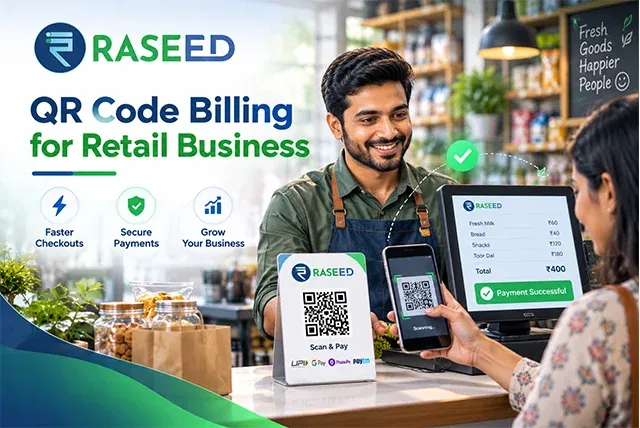
A customer reaches the billing counter, the bill is ready, and payment should take only a few seconds. This is where QR code billing can make the checkout process simpler. Instead of handling cash or entering card details, customers can scan a QR code using their phone and complete the payment through their preferred UPI app.
What Is QR Code Billing?
QR code billing uses a scannable QR code to help customers make a payment for a purchase. The QR code can be at the billing counter or generated along with the bill, depending on the payment and billing setup.
The customer scans the code using a smartphone, checks the payment details, and completes the transaction through a supported payment app. QR code billing is commonly used with UPI payments in India, making it a convenient option for retail stores and other businesses that handle frequent customer payments.
Benefits of QR Code Billing for Retail Businesses

Faster Checkout
Long queues can become a problem during busy hours. QR code billing gives customers a quick way to complete their payment using their own phone. For stores with many small transactions, even a few seconds saved at each checkout can make the billing counter easier to manage.
Convenient UPI Payments
Less Cash Handling
Easier Payment Tracking
Paperless Billing Options
QR Code Billing in POS and Invoice Systems
QR Code Billing for Different Retail Businesses
What to Check Before Using QR Code Billing
A QR code is only one part of the checkout process. Proper billing, payment records, and sales tracking are still important for day-to-day business management.
QR Code Billing with Raseed
For retailers already accepting digital payments, using QR code billing alongside organized billing records can make the checkout process easier to manage.
Make QR Code Billing Part of a Better Checkout Process