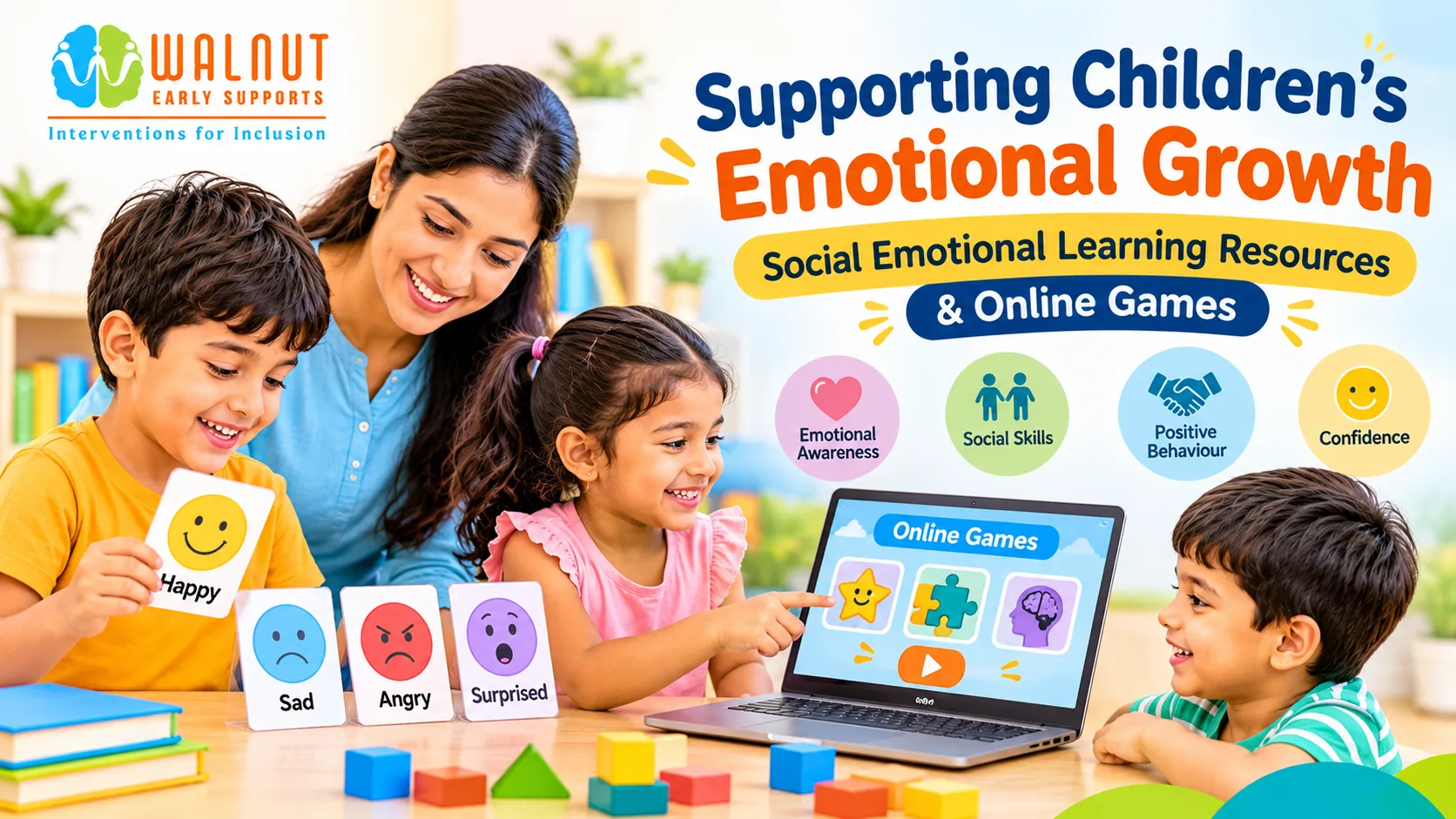
Children experience many emotions as they grow. They feel happy when they play, frustrated when something goes wrong, nervous in unfamiliar situations, and sometimes upset when they cannot express what they want. Understanding these feelings and learning how to manage them are important parts of childhood development.
However, children do not automatically know how to recognise or communicate their emotions. They need time, guidance, and regular opportunities to practise. This is where Social Emotional Learning Resources can make a difference. Through visual activities, stories, games, and guided interactions, children can gradually understand their feelings and learn healthy ways to respond to different situations.
What Is Emotional Growth in Children?
Emotional growth refers to a child's ability to recognise feelings, express emotions, manage reactions, and understand how other people feel. These abilities develop gradually through everyday experiences and interactions.
For example, a young child may cry when a toy is taken away because they do not yet know how to express frustration. With guidance, the same child may eventually learn to say, "I am upset because I want the toy."
This progress may seem small, but it reflects an important developmental step. Children are learning to understand their emotions and communicate their needs more effectively.
Why Is Emotional Development Important During Childhood?
Emotional development influences how children communicate, build relationships, participate in learning, and respond to everyday challenges.
Some important benefits include:
1. Helps Children Recognise Their Feelings
Children may experience different emotions without knowing how to identify them. They might understand that something feels uncomfortable but struggle to explain whether they are angry, worried, disappointed, or sad.
Emotion cards, facial expression pictures, and simple storytelling can help children connect feelings with words.
For example, showing a picture of a happy child and asking, "What do you think this child is feeling?" encourages children to observe facial expressions and identify emotions.
2. Encourages Healthy Emotional Expression
Some children express their feelings through crying, shouting, withdrawing, or changes in behaviour. This can happen when they do not have enough words or strategies to communicate their needs.
Providing opportunities to practise emotional expression helps children understand that feelings can be communicated in different ways.
Adults can encourage simple expressions such as:
-
I feel happy.
-
I am feeling sad.
-
I need some help.
-
I do not like this.
-
I need a break.
These small communication steps can help children express themselves more comfortably.
3. Builds Self-Regulation Skills
Self-regulation is the ability to manage emotions, behaviour, and responses in different situations.
For children, this might mean waiting for their turn, calming down after disappointment, or following instructions even when they feel frustrated.
Simple breathing exercises, calming activities, visual reminders, and predictable routines can support this learning process.
Children should not be expected to manage every emotion independently. They often need adults to model appropriate responses and guide them through difficult moments.
How Social Emotional Learning Resources Support Emotional Growth
Children learn emotional concepts more effectively when they can see examples and practise them in familiar situations.
Social Emotional Learning Resources provide structured opportunities to explore emotions, understand social situations, and develop positive responses.
Here are some ways these materials can support emotional growth.
Learning Through Visual Activities
Pictures and visual materials make abstract emotional concepts easier to understand. Emotion charts, facial expression cards, and situation-based illustrations help children recognise different feelings.
For children who have difficulty expressing themselves verbally, visual communication materials can also provide an alternative way to indicate how they feel.
Understanding Everyday Social Situations
Children regularly encounter situations that require emotional understanding. Sharing toys, waiting in a queue, losing a game, or meeting someone new can create different emotional responses.
Social stories help explain these situations through simple language and pictures. They show children what might happen, how someone may feel, and what responses they can try.
Developing Problem-Solving Skills
Emotional growth also involves learning how to respond when something does not go as expected.
For example, if two children want the same toy, an adult can guide them towards possible solutions such as taking turns, sharing, or choosing another activity.
These experiences encourage children to think about situations rather than reacting immediately.
Useful Social and Emotional Learning Activities for Children
Parents, therapists, and educators can introduce simple activities into everyday routines.
Some practical examples include:
-
Emotion matching: Match facial expressions with emotion words such as happy, sad, angry, and surprised.
-
Storytelling: Read short stories and ask children how the characters might feel.
-
Role-playing: Practise situations such as asking for help, sharing toys, and greeting friends.
-
Calming activities: Introduce deep breathing, quiet time, or relaxing activities.
-
Feelings conversations: Ask children how they felt during different parts of their day.
These activities can be adjusted according to a child's age, understanding, and communication abilities.
The Role of Parents, Therapists, and Educators
Consistent guidance from adults plays an important role in social emotional development in children.
Parents can encourage emotional expression during daily conversations. Instead of dismissing a child's feelings, they can acknowledge them and help the child find appropriate words.
Speech-language therapists can include emotion vocabulary, understanding facial expressions, turn-taking, and social communication goals in therapy sessions.
Educators can encourage cooperation, patience, and positive interactions through classroom routines and group activities.
Providing consistent social emotional learning support across different environments helps children practise their skills in real-life situations.
Choosing the Right Child Development Therapy Resources
Every child develops differently, so learning materials should match their individual needs.
When selecting child development therapy resources, consider the following:
-
Age and developmental level: Choose activities that are suitable for the child's understanding.
-
Visual presentation: Prefer clear pictures and simple instructions.
-
Specific learning goals: Select materials that address emotional recognition, communication, or social interaction.
-
Repetition: Allow children to practise familiar activities regularly.
-
Flexibility: Choose resources that can be used at home, school, or during therapy sessions.
Digital platforms such as Walnut Early Supports provide structured therapy materials across different developmental areas, helping parents, educators, and therapists access activities for children's learning and practice.
Conclusion
Emotional growth is an important part of a child's overall development. Learning to recognise feelings, express needs, manage reactions, and understand others takes time and consistent practice.
Using Social Emotional Learning Resources through visual materials, storytelling, games, and everyday interactions can make these concepts easier for children to understand. With patient guidance from parents, therapists, and educators, children can gradually develop emotional awareness, communication skills, and confidence.
The goal is not to prevent children from experiencing difficult emotions. It is to help them understand those emotions and learn healthy ways to manage them as they grow.